
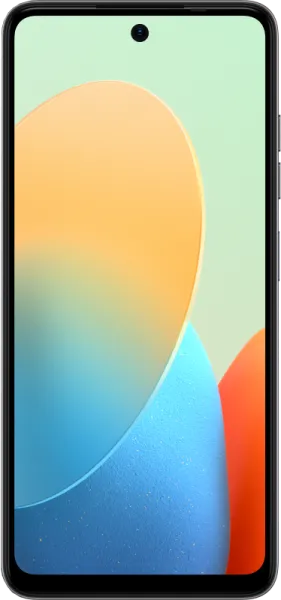
Let's dive into a comparative analysis of the Google Pixel 7 and the Tecno Spark Go 2024. These two smartphones occupy different ends of the price spectrum and cater to distinct user needs. My goal here is to equip you with the knowledge to decide which phone best fits your life.
1. Specifications Breakdown
| Feature | Google Pixel 7 | Tecno Spark Go 2024 | Real-World Implications |
|---|---|---|---|
| Design | |||
| Dimensions (mm) | 155.6 x 73.2 x 8.7 | 163.7 x 75.6 x 8.6 | Pixel 7 is more compact and potentially easier to handle. |
| Weight (g) | 197 | 0 | Weight data missing for Spark Go. Pixel 7's weight is average for its size. |
| Build Materials | Aluminum frame, Gorilla Glass Victus | Plastic Frame | Pixel 7 offers a more premium feel and greater durability. |
| Display | |||
| Size | 6.3" | 6.6" | Spark Go has a larger screen, better for media consumption; Pixel 7 is more pocketable. |
| Resolution | 1080 x 2400 | 720 x 1612 | Pixel 7's significantly higher resolution delivers sharper text and images. |
| Type | AMOLED, 90Hz | IPS LCD, 90Hz | Pixel 7's AMOLED provides richer colors, deeper blacks, and better power efficiency. |
| Performance | |||
| Chipset | Google Tensor G2 | Unisoc T606 | Pixel 7's Tensor G2 offers significantly faster processing and AI capabilities. |
| CPU | Octa-core (2x2.85 GHz Cortex-X1 & 2x2.35 GHz Cortex-A78 & 4x1.80 GHz Cortex-A55) | Octa-core (2x1.6 GHz Cortex-A75 & 6x1.6 GHz Cortex-A55) | Pixel 7 will handle demanding tasks and multitasking much more smoothly. |
| RAM | 8GB | 4GB | Pixel 7's larger RAM allows for more apps to run in the background without slowdown. |
| Camera | |||
| Rear Camera | 50MP Main, 12MP Ultrawide | 13MP Main | Pixel 7 boasts superior camera hardware and Google's renowned image processing for significantly better photos. |
| Selfie Camera | 10.8MP | 8MP | Pixel 7 likely produces higher quality selfies. |
| Battery Life | |||
| Capacity | 4355 mAh | 5000 mAh | Spark Go has a larger battery capacity, suggesting potentially longer battery life. Actual usage will vary. |
2. Key Insights
- Performance Disparity: The Pixel 7, powered by the Google Tensor G2, dramatically outperforms the Spark Go in processing power, graphics rendering, and AI capabilities. This translates to a smoother user experience, faster app loading, and superior multitasking. The Pixel 7 is built for demanding tasks, while the Spark Go is designed for essential functions.
- Display Quality: The Pixel 7's AMOLED display delivers vibrant colors, deep blacks, and excellent contrast, providing a more immersive visual experience compared to the Spark Go's IPS LCD. While both phones offer a 90Hz refresh rate for smooth scrolling, the Pixel 7's superior panel quality is noticeable.
- Camera Prowess: Google's Pixel line is known for its exceptional camera performance, and the Pixel 7 continues this tradition. Its advanced hardware, combined with Google's computational photography algorithms, results in stunning photos and videos. The Spark Go's camera, while functional, is not in the same league.
3. User Profiles and Recommendations
- Pixel 7: Ideal for users who prioritize performance, a premium user experience, a top-tier camera, and regular software updates. This phone is suitable for power users, photographers, and those who want a device that can handle anything they throw at it.
- Tecno Spark Go 2024: Best suited for budget-conscious users who primarily use their phones for basic communication, social media, and light web browsing. This phone is a good option for students, first-time smartphone users, or anyone looking for a simple, affordable device.
4. Buying Decision Framework
- What is your budget? The Pixel 7 is a mid-range phone, while the Spark Go is an entry-level device.
- What are your primary phone usage patterns? Heavy users will appreciate the Pixel 7's performance, while light users might find the Spark Go sufficient.
- How important is camera quality to you? The Pixel 7's camera is a clear winner in this category.
My Choice: I would choose the Google Pixel 7 without hesitation. As a tech journalist who relies on a phone for everything from writing and research to photography and video recording, the Pixel 7's superior performance, stunning display, and exceptional camera are essential. The smoother user experience, longer software support, and premium build quality make it a worthwhile investment in the long run. While the Tecno Spark Go 2024 offers excellent value for its price, it simply doesn't meet my needs as a power user and someone deeply engaged with mobile technology. The performance gap is too significant to overlook.
