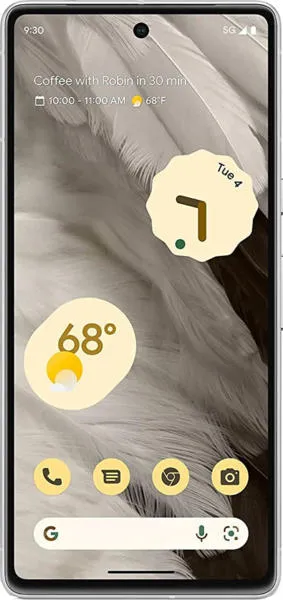

Google Pixel 7 vs. Google Pixel 8: A Deep Dive and User-Focused Comparison
The Google Pixel 7 and Pixel 8 represent Google's latest foray into the smartphone arena. While iterative updates on paper, these phones boast subtle yet significant enhancements. Let's dissect their specifications and uncover their real-world impact on user experience.
1. Specifications Breakdown
| Feature | Google Pixel 7 | Google Pixel 8 | Real-World Implications |
|---|---|---|---|
| Design | |||
| Dimensions (mm) | 155.6 x 73.2 x 8.7 | 150.5 x 70.8 x 8.9 | Pixel 8 is slightly smaller and lighter, improving one-handed usability. |
| Weight (g) | 197 | 187 | Noticeable difference in hand feel; Pixel 8 reduces fatigue during extended use. |
| Display | |||
| Size (inches) | 6.3 | 6.2 | Negligible difference in screen real estate. |
| Resolution (px) | 1080 x 2400 | 1080 x 2400 | Identical sharpness; both offer crisp visuals. |
| Refresh Rate (Hz) | 90 | 120 | Pixel 8's 120Hz delivers smoother scrolling and animations, enhancing perceived performance. |
| Peak Brightness(nits) | 1400 | 2000 | Pixel 8 offers significantly better outdoor visibility in direct sunlight. |
| Performance | |||
| Chipset | Google Tensor G2 | Google Tensor G3 | G3 promises performance and efficiency gains, impacting app loading times, multitasking, and battery life. |
| CPU | Octa-core (2x2.85 GHz Cortex-X1 & 2x2.35 GHz Cortex-A78 & 4x1.80 GHz Cortex-A55) | Nona-core (1x3.0 GHz Cortex-X3 & 4x2.45 GHz Cortex-A715 & 4x2.15 GHz Cortex-A510) | G3's updated architecture should provide a noticeable performance boost in demanding tasks and gaming. |
| GPU | Mali-G710 MP7 | Immortalis-G715s MC10 | Improved graphics rendering capabilities on the Pixel 8 for smoother gaming and visually intensive applications. |
| RAM (GB) | 8 | 8 | Both offer ample RAM for smooth multitasking. |
| Camera | |||
| Main Sensor (MP) | 50 (Samsung GN1) | 50 (Samsung GNV) | While the resolution remains the same, the GNV sensor in the Pixel 8 is expected to offer improved light capture and image quality due to architectural changes not reflected in raw specs. |
| Wide Angle (MP) | 12 (Sony IMX381) | 12 (Sony IMX386) | Pixel 8's IMX386 potentially offers wider field of view and improved low-light performance. However, smaller pixel size could negatively impact image quality. This needs further real-world testing. |
| Battery Life | |||
| Capacity (mAh) | 4355 | 4575 | Pixel 8's larger battery, combined with the more efficient G3 chip, should translate to longer battery life. |
2. Key Insights
- Performance Leap: The Tensor G3's architectural advancements should provide a noticeable performance boost over the G2, making the Pixel 8 more responsive and future-proof.
- Enhanced Visual Experience: The Pixel 8's 120Hz display and increased peak brightness create a more immersive and enjoyable viewing experience, particularly outdoors. Smoother scrolling and more vibrant colors are key differentiators.
- Subtle Camera Improvements: While megapixel counts remain similar, the sensor upgrades in the Pixel 8 suggest potential improvements in image quality, low-light performance, and dynamic range. Real-world testing will be crucial to validate these claims.
- Extended Battery Life: The Pixel 8's larger battery and more efficient chip should result in noticeable improvements in battery life, addressing a common concern with the Pixel 7.
3. User Profiles and Recommendations
- Pixel 7: Suitable for users who prioritize value and a solid Android experience. Excellent camera capabilities and smooth performance make it a great all-around device.
- Pixel 8: Ideal for users who demand the latest technology, prioritize a premium display, and desire top-tier performance. Gamers, power users, and those who consume a lot of media will appreciate the upgrades.
4. Buying Decision Framework
- Budget-conscious? The Pixel 7 offers excellent value for its price.
- Seeking the smoothest and most responsive experience? The Pixel 8's 120Hz display and Tensor G3 will deliver.
- Prioritize battery life? The Pixel 8's larger battery and efficient chip are compelling reasons to upgrade.
My Choice: As Alex Griffin, I would choose the Pixel 8. While the Pixel 7 is a capable device, the Pixel 8's performance gains, improved display, and potential camera enhancements, along with expected battery life improvements, justify the upgrade for me. The smoother 120Hz refresh rate significantly impacts the day-to-day user experience, and the brighter display is a crucial factor for outdoor usage. I value having the latest and greatest technology, especially when it translates to tangible benefits in real-world use. The increased longevity offered by the newer chipset and potentially longer software support timeframe also factor into my decision.
