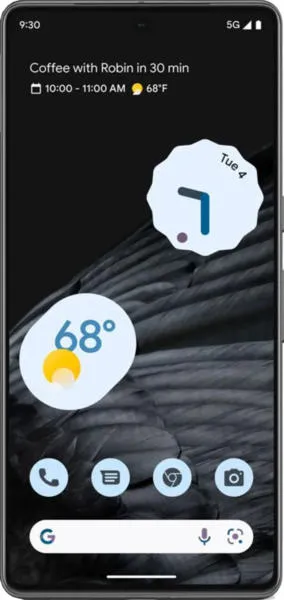
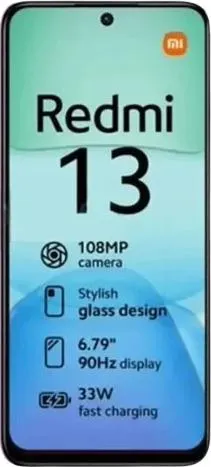
Google Pixel 7 Pro vs. Xiaomi Redmi 13: A Deep Dive
Let's dissect the Google Pixel 7 Pro and the Xiaomi Redmi 13, going beyond the spec sheet to understand what these phones offer in the real world.
1. Specifications Breakdown
| Feature | Google Pixel 7 Pro | Xiaomi Redmi 13 | Real-World Implications |
|---|---|---|---|
| Design | |||
| Dimensions (mm) | 162.9 x 76.6 x 8.9 | 168.6 x 76.3 x 8.3 | Pixel 7 Pro is slightly smaller and thinner. Redmi 13 might feel larger in hand. |
| Weight (g) | 212 | 205 | Negligible weight difference in practical use. |
| Build Materials | Aluminum frame, Gorilla Glass Victus | Plastic frame, Gorilla Glass 3 | Pixel boasts a more premium build with better scratch and drop resistance. |
| Display | |||
| Display Type | LTPO AMOLED | IPS LCD | Pixel 7 Pro offers superior contrast, deeper blacks, and potentially better power efficiency due to LTPO. Redmi's LCD may be brighter outdoors. |
| Refresh Rate (Hz) | 120 | 90 | Pixel 7 Pro will deliver smoother scrolling and animations. |
| Resolution | 1440 x 3120 | 1080 x 2460 | Pixel 7 Pro has a sharper display with significantly higher pixel density (512 vs 396 ppi), resulting in crisper text and images. |
| Performance | |||
| Chipset | Google Tensor G2 | Mediatek Helio G91 | Tensor G2 offers superior AI processing and overall performance compared to the Helio G91. Expect smoother multitasking and demanding applications on the Pixel. |
| CPU | Octa-core (2x2.85 GHz Cortex-X1 & 2x2.35 GHz Cortex-A78 & 4x1.80 GHz Cortex-A55) | Octa-core (2x2.0 GHz Cortex-A75 & 6x1.8 GHz Cortex-A55) | Pixel's CPU has a higher clock speed and more powerful cores, leading to faster processing in demanding tasks. |
| RAM | 12GB | 8GB | Pixel 7 Pro's larger RAM enables better multitasking and smoother performance with multiple apps open. |
| Camera | |||
| Main Camera (MP) | 50 | 108 | While Redmi has higher megapixels, Pixel's computational photography prowess, including Super Res Zoom, often delivers better image quality overall. |
| Telephoto | 48MP (5x Optical Zoom) | None (Digital Zoom Only) | Pixel 7 Pro provides significantly better zoom capabilities with dedicated telephoto lens |
| Video | 4K@60fps with HDR, OIS, EIS | 1080p@30fps | Pixel offers superior video resolution, frame rate, and stabilization. |
| Battery Life | |||
| Capacity (mAh) | 5000 | 5030 | Negligible difference in battery capacity. Real-world battery life will depend heavily on usage patterns and software optimization. |
2. Key Insights
- Pixel 7 Pro: The Premium Powerhouse: The Pixel excels in overall performance, camera quality, and display brilliance. Its Tensor G2 chip delivers a smooth, AI-powered experience, while the camera shines with computational photography magic. The vibrant LTPO AMOLED display offers a visual treat.
- Redmi 13: The Budget Contender: The Redmi 13 focuses on affordability while offering a large display and a long-lasting battery. It's a solid choice for basic tasks like browsing, social media, and casual gaming.
3. User Profiles and Recommendations
- Pixel 7 Pro: Ideal for users who prioritize performance, camera quality, a premium experience, and the latest Android features. Photographers, videographers, and power users will appreciate its capabilities.
- Redmi 13: Suitable for budget-conscious users who need a reliable phone for everyday tasks. Students, casual users, and those seeking a large screen for media consumption will find it a good fit.
4. Buying Decision Framework
- What is your budget? The Pixel 7 Pro is a significantly more expensive device.
- What are your priorities? Prioritize performance, camera, and a premium feel? Choose the Pixel. Prioritize affordability and a large display? Choose the Redmi.
- What type of user are you? Power user or casual user? This will greatly influence your decision.
My Choice: As a tech journalist with a focus on performance and cutting-edge features, I would choose the Google Pixel 7 Pro. The superior camera system, the smooth performance of the Tensor G2 chip, the vibrant display, and the frequent software updates aligned with Google's pure Android experience are compelling. While the Redmi 13 offers great value, the Pixel's advantages in key areas that matter most to me – photography, performance, and software – justify the higher price. The Pixel 7 Pro is a device that empowers creativity and productivity, fitting seamlessly into a demanding workflow.
