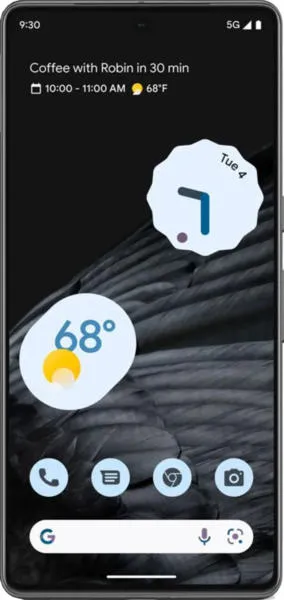

Google Pixel 7 Pro vs. Xiaomi Poco F5 Pro: A Deep Dive
Let's dissect the Google Pixel 7 Pro and the Xiaomi Poco F5 Pro, going beyond the spec sheet to understand what these phones offer in the real world.
1. Specifications Breakdown
| Feature | Google Pixel 7 Pro | Xiaomi Poco F5 Pro | Real-World Implications |
|---|---|---|---|
| Design | |||
| Dimensions (mm) | 162.9 x 76.6 x 8.9 | 162.8 x 75.4 x 8.6 | Poco F5 Pro is slightly narrower and thinner. |
| Weight (g) | 212 | 204 | Pixel 7 Pro feels a bit more substantial in hand. |
| Build Materials | Aluminum frame, Gorilla Glass Victus | Glass front (Gorilla Glass 5), plastic frame, glass back | Pixel boasts more premium materials, potentially better durability. |
| Display | |||
| Size (inches) | 6.7 | 6.67 | Virtually identical screen real estate. |
| Resolution (px) | 1440 x 3120 | 1440 x 3200 | Both offer sharp QHD+ resolution. |
| Panel Type | LTPO AMOLED | AMOLED | Pixel's LTPO allows for dynamic refresh rate, saving battery. |
| Refresh Rate (Hz) | 1-120 | 120 | Smoother scrolling and animations on both, Pixel more efficient. |
| Peak Brightness(nits) | 1500 | 1400 | Pixel 7 Pro might be slightly more visible in direct sunlight. |
| Performance | |||
| Chipset | Google Tensor G2 | Snapdragon 8+ Gen 1 | Snapdragon generally benchmarks higher in raw performance. |
| CPU | Octa-core (2x2.85 GHz Cortex-X1...) | Octa-core (1x3.0 GHz Cortex-X2...) | Poco F5 Pro likely has a slight edge in CPU tasks. |
| GPU | Mali-G710 MP7 | Adreno 730 | Adreno 730 typically offers better gaming performance. |
| RAM (GB) | 12 | 12 | Ample memory for multitasking on both devices. |
| Camera | |||
| Main Camera (MP) | 50 | 64 | Higher megapixel count on Poco F5 Pro doesn't guarantee better photos. |
| Telephoto | 48MP (5x Optical) | None (Digital Zoom) | Pixel's dedicated telephoto lens offers superior zoom capabilities. |
| Ultrawide | 12MP | 8MP | Pixel's ultrawide likely produces higher quality images. |
| Battery Life | |||
| Capacity (mAh) | 5000 | 5160 | Poco F5 Pro has a slightly larger battery. |
2. Key Insights
- Performance: While the Snapdragon 8+ Gen 1 in the Poco F5 Pro generally benchmarks higher, the Tensor G2 in the Pixel 7 Pro is optimized for AI and machine learning tasks, leading to a smoother, more intuitive user experience, especially within the Google ecosystem.
- Camera: The Pixel 7 Pro shines with its superior camera system. Google's image processing prowess, combined with a dedicated telephoto lens, delivers exceptional image quality and versatility. The Poco F5 Pro boasts a higher megapixel main sensor but lacks a dedicated telephoto lens.
- Display: Both phones offer stunning displays. However, the Pixel 7 Pro's LTPO panel allows for a dynamic refresh rate, adapting to content and conserving battery. This results in longer battery life without sacrificing smoothness.
- Software: Pixel's pure Android experience with guaranteed updates and timely security patches is a major advantage for users who prioritize software support and a clean interface. Xiaomi's MIUI, while feature-rich, can feel more cluttered.
3. User Profiles and Recommendations
- Pixel 7 Pro: Ideal for users who value a premium, refined experience with a focus on camera quality, software updates, and seamless integration with Google services. Photographers, content creators, and those seeking a clean Android experience will appreciate the Pixel.
- Poco F5 Pro: Best suited for users who prioritize raw performance and gaming capabilities on a budget. The larger battery and powerful Snapdragon processor make it a compelling option for power users who are less concerned with camera finesse or software updates.
4. Buying Decision Framework
- What is your primary use case? Photography/Videography, general use, or gaming?
- How important is software support and a clean Android experience?
- What is your budget?
Scenario-Based Recommendations:
- Photography Enthusiast: Pixel 7 Pro
- Hardcore Gamer: Poco F5 Pro
- Everyday User Seeking a Balanced Experience: Either phone could be a good fit, depending on individual preferences for software and camera.
My Choice: Google Pixel 7 Pro
If I were choosing between these two, I'd opt for the Google Pixel 7 Pro. While the Poco F5 Pro offers tempting performance, the Pixel's superior camera system, clean software experience with guaranteed updates, and the power efficiency of the LTPO display are more compelling to me. The Pixel's overall user experience, driven by Google's AI-focused Tensor G2 chip, aligns more closely with my priorities. The slightly higher price tag is justified by the tangible benefits in everyday use. The seamless integration with the Google ecosystem, which I heavily rely on, further solidifies my decision.
