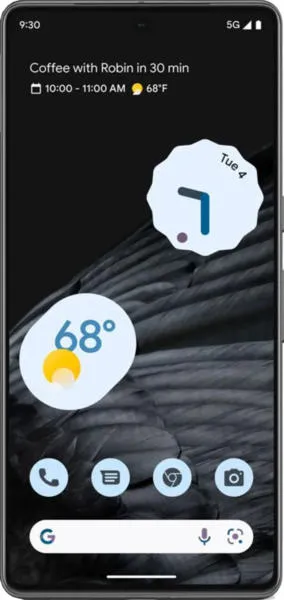
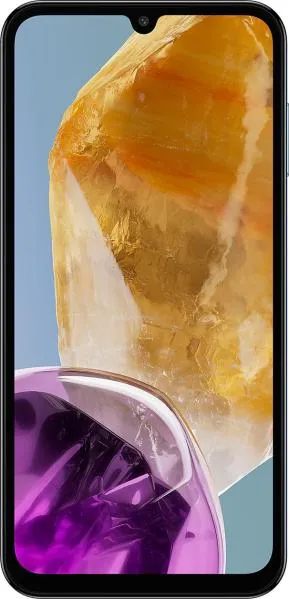
Google Pixel 7 Pro vs. Samsung Galaxy M15: A Deep Dive
Let's dissect the Google Pixel 7 Pro and the Samsung Galaxy M15, two phones vying for your attention in the mid-range market. We'll go beyond the spec sheet to uncover what these numbers truly mean for your daily life.
1. Specifications Breakdown
| Feature | Google Pixel 7 Pro | Samsung Galaxy M15 | Real-World Implications |
|---|---|---|---|
| Design | |||
| Dimensions (mm) | 162.9 x 76.6 x 8.9 | 160.1 x 76.8 x 9.3 | Pixel 7 Pro is slightly taller and slimmer, but heavier. M15 might feel bulkier in hand. |
| Weight (g) | 212 | 217 | Negligible difference in weight; both phones have a substantial feel. |
| Display | |||
| Size (inches) | 6.7 | 6.5 | Pixel offers a larger screen for more immersive content consumption. |
| Resolution (px) | 1440 x 3120 | 1080 x 2340 | Pixel's significantly higher resolution translates to sharper text, images, and videos. |
| Refresh Rate (Hz) | 120 (LTPO) | 90 | Pixel's adaptive 120Hz display provides smoother scrolling and animations while conserving battery when static. |
| Display Type | LTPO AMOLED | Super AMOLED | Both offer vibrant colors and deep blacks, but Pixel's LTPO technology allows for more granular refresh rate control. |
| Performance | |||
| Chipset | Google Tensor G2 | Dimensity 6100+ | Tensor G2, with its AI focus, should offer superior performance in AI-driven tasks and overall responsiveness. |
| CPU | Octa-core (2x2.85 GHz Cortex-X1 & 2x2.35 GHz Cortex-A78 & 4x1.80 GHz Cortex-A55) | Octa-core (2x2.2 GHz Cortex-A76 & 6x2.0 GHz Cortex-A55) | Pixel's CPU boasts higher clock speeds and more powerful cores, indicating better multi-tasking and demanding app performance. |
| RAM (GB) | 12 | 6 | Pixel's double the RAM allows for seamless multitasking and app switching without slowdowns. |
| Camera | |||
| Main Camera (MP) | 50 | 50 | Similar megapixel count, but Pixel's advanced image processing and computational photography likely yield better results. |
| Telephoto | 48 MP (5x optical) | None | Pixel offers a dedicated telephoto lens for superior zoom capabilities. |
| Battery Life | |||
| Capacity (mAh) | 5000 | 6000 | While M15 has a larger battery, Pixel's power-efficient Tensor G2 chip and LTPO display could result in comparable battery life. |
2. Key Insights
The Pixel 7 Pro shines with its superior display, significantly faster performance thanks to the Tensor G2 chip and ample RAM, and a more versatile camera system with a dedicated telephoto lens. Its AI capabilities further enhance user experience, offering features like live translation and call screening.
The Galaxy M15, while offering a larger battery and a more affordable price point, lags behind in processing power, display quality, and camera versatility. Its strength lies in its long-lasting battery, making it ideal for users who prioritize all-day usage on a single charge.
3. User Profiles and Recommendations
Pixel 7 Pro: Ideal for power users, photographers, and those who demand a premium experience with top-tier performance, a stunning display, and cutting-edge camera technology.
Galaxy M15: Best suited for budget-conscious users who prioritize battery life over raw performance and advanced features. A good choice for basic tasks like calling, texting, web browsing, and social media.
4. Buying Decision Framework
- What is your budget? The Pixel 7 Pro is a flagship-level device with a higher price tag, while the M15 offers a more budget-friendly option.
- What are your primary phone usage patterns? For demanding tasks, gaming, and photography, the Pixel 7 Pro excels. For basic communication and long battery life, the M15 is sufficient.
- Do you value a premium user experience? The Pixel 7 Pro offers a more refined and feature-rich experience overall. The M15 provides the essentials without the bells and whistles.
Scenario-Based Recommendations:
- Student on a Budget: Galaxy M15
- Professional Photographer: Pixel 7 Pro
- Casual User Prioritizing Battery Life: Galaxy M15
- Tech Enthusiast Seeking the Latest Features: Pixel 7 Pro
My Choice: Google Pixel 7 Pro
As a tech journalist who values performance, a fluid user experience, and advanced camera capabilities, the Pixel 7 Pro is the clear winner for me. The Tensor G2 chip's AI-driven features, combined with the stunning 120Hz LTPO display and the versatile camera system, make it a compelling package. While the Galaxy M15 offers a larger battery, the Pixel's overall performance and feature set outweigh that single advantage. I'm willing to invest in the superior technology and refined experience the Pixel 7 Pro provides.
