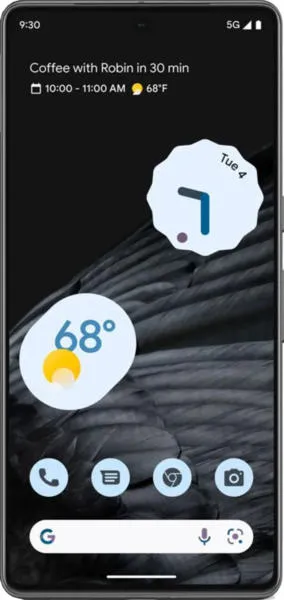

Google Pixel 7 Pro vs. Realme 12 Pro: A Deep Dive
Let's dissect the Google Pixel 7 Pro and the Realme 12 Pro, two compelling smartphones vying for your attention in the mid-range market. We'll go beyond the spec sheet, translating technical jargon into real-world implications for your daily usage.
1. Specifications Breakdown
| Feature | Google Pixel 7 Pro | Realme 12 Pro | Real-World Implications |
|---|---|---|---|
| Design | |||
| Dimensions (mm) | 162.9 x 76.6 x 8.9 | 161.5 x 74 x 8.8 | Pixel 7 Pro slightly taller and wider; both feel premium and slim. |
| Weight (g) | 212 | 190 | Realme 12 Pro noticeably lighter for extended use. |
| Display | |||
| Size (inches) | 6.7 | 6.7 | Identical screen real estate for immersive content. |
| Resolution (px) | 1440 x 3120 | 1080 x 2412 | Pixel 7 Pro boasts significantly sharper visuals (512 vs 394 PPI). |
| Refresh Rate (Hz) | 120 (LTPO) | 120 | Both offer smooth scrolling; Pixel's LTPO allows for dynamic refresh rate, saving battery. |
| Display Type | LTPO AMOLED | AMOLED | Pixel's LTPO panel offers potentially better power efficiency and smoother scrolling. |
| Performance | |||
| Chipset | Google Tensor G2 | Snapdragon 6 Gen 1 | Tensor G2 focuses on AI and machine learning, potentially offering a smoother user experience; Snapdragon 6 Gen 1 offers broader compatibility. |
| CPU | Octa-core (2x2.85 GHz Cortex-X1 & 2x2.35 GHz Cortex-A78 & 4x1.80 GHz Cortex-A55) | Octa-core (4x2.2 GHz Cortex-A78 & 4x1.8 GHz Cortex-A55) | Tensor G2 likely delivers superior performance in demanding tasks due to faster prime cores. |
| RAM (GB) | 12 | 8 | Pixel 7 Pro handles multitasking and demanding apps more efficiently. |
| Camera | |||
| Main Camera (MP) | 50 | 50 | Comparable primary sensor resolution; real-world performance depends on image processing. |
| Telephoto (MP) | 48 | 32 | Pixel 7 Pro offers a higher resolution telephoto lens for better zoom capabilities. |
| Battery Life | |||
| Capacity (mAh) | 5000 | 5000 | Identical battery capacity; actual battery life depends on optimization and usage. |
2. Key Insights
- Display Prowess: The Pixel 7 Pro's higher resolution and LTPO AMOLED display deliver a noticeably superior visual experience. Sharper details, vibrant colors, and smoother scrolling are key advantages.
- Performance Edge: The Tensor G2 chip, while specialized, likely outperforms the Snapdragon 6 Gen 1 in demanding tasks and AI-powered features. The Pixel 7 Pro also benefits from more RAM.
- Camera Capabilities: Both phones offer impressive camera systems, but the Pixel 7 Pro's superior telephoto lens and Google's renowned image processing algorithms give it an edge, especially in zoom and low-light scenarios. The Realme 12 Pro's 32MP telephoto offers 2x optical zoom compared to the Pixel's 5x, but having optical image stabilization (OIS) on the telephoto will result in sharper images.
- Software Experience: Pixel phones enjoy a clean Android experience with guaranteed updates, while Realme's UI might include customizations that some users may or may not prefer.
3. User Profiles and Recommendations
- Pixel 7 Pro: Ideal for users who prioritize a premium display, top-tier camera performance, smooth performance, and a pure Android experience. Photographers, videographers, and power users will appreciate its capabilities.
- Realme 12 Pro: A great option for users seeking a stylish, lightweight phone with a good display and capable performance at a potentially more affordable price. Casual users, social media enthusiasts, and those on a budget will find it appealing.
4. Buying Decision Framework
- Is display quality a top priority? If yes, the Pixel 7 Pro's sharper, more responsive display is the clear winner.
- How important is raw processing power and the latest software? The Pixel 7 Pro's Tensor G2 chip and guaranteed Android updates make it the better choice for performance and longevity.
- What's your budget? The Realme 12 Pro might offer better value if price is a significant factor.
My Choice: Google Pixel 7 Pro
If I were choosing between these two phones, I'd opt for the Google Pixel 7 Pro. While the Realme 12 Pro is a solid contender, the Pixel's superior display, performance advantages powered by the Tensor G2, exceptional camera system with a better telephoto lens, and clean Android experience with timely updates are compelling. These factors, combined with Google's focus on AI and machine learning, create a more future-proof and overall more satisfying user experience. I value the responsiveness and quality of a great display, and the Pixel 7 Pro's LTPO AMOLED panel is a clear differentiator. The added benefit of Google's computational photography prowess solidifies my decision.
