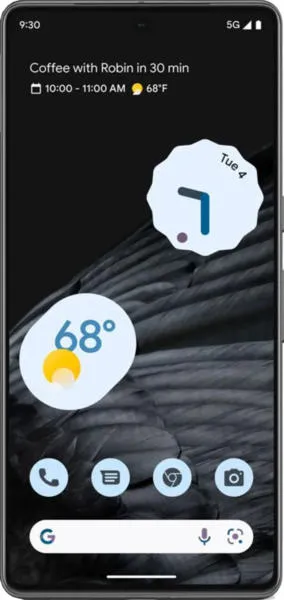

Google Pixel 7 Pro vs. Oppo Reno8 T: A Deep Dive
Let's dissect the Google Pixel 7 Pro and the Oppo Reno8 T, translating their spec sheets into real-world experiences to help you decide which phone fits your needs.
1. Specifications Breakdown
| Feature | Google Pixel 7 Pro | Oppo Reno8 T | Real-World Implications |
|---|---|---|---|
| Design | |||
| Dimensions (mm) | 162.9 x 76.6 x 8.9 | 160.8 x 73.8 x 7.8 | Pixel 7 Pro slightly larger, Reno8 T thinner and lighter |
| Weight (g) | 212 | 180 | Reno8 T noticeably lighter for one-handed use |
| Display | |||
| Display Type | LTPO AMOLED | AMOLED | Pixel 7 Pro offers smoother scrolling and potentially better battery life due to variable refresh rate |
| Refresh Rate (Hz) | 120 | 90 | Pixel 7 Pro provides a more fluid visual experience |
| Resolution | 1440 x 3120 | 1080 x 2400 | Pixel 7 Pro significantly sharper and more detailed |
| Peak Brightness (nits) | 1500 | 950 | Pixel 7 Pro dramatically brighter in direct sunlight |
| Performance | |||
| Chipset | Google Tensor G2 | Mediatek Helio G99 | Pixel 7 Pro boasts a more powerful, AI-focused processor |
| CPU | Octa-core (2x2.85 GHz Cortex-X1 & 2x2.35 GHz Cortex-A78 & 4x1.80 GHz Cortex-A55) | Octa-core (2x2.2 GHz Cortex-A76 & 6x2.0 GHz Cortex-A55) | Pixel 7 Pro offers superior processing power for demanding tasks and multitasking |
| GPU | Mali-G710 MP7 | Mali-G57 MC2 | Pixel 7 Pro provides smoother gaming and graphics performance |
| RAM (GB) | 12 | 8 | Pixel 7 Pro allows for more apps running in the background without performance slowdown |
| Camera | |||
| Main Camera (MP) | 50 | 108 | Reno8 T boasts higher megapixel count, but Pixel 7 Pro excels in computational photography |
| Telephoto (MP) | 48 | N/A | Pixel 7 Pro offers superior zoom capabilities |
| Ultrawide (MP) | 12 | N/A | Pixel 7 Pro includes an ultrawide lens for broader perspectives |
| DXOMARK Score | 147 | N/A | Pixel 7 Pro objectively ranks high in image quality |
| Battery Life | |||
| Capacity (mAh) | 5000 | 5000 | Similar battery capacities, but real-world usage may vary due to display and processor differences |
2. Key Insights
The Pixel 7 Pro shines with its superior display, significantly faster processor, more advanced camera system with telephoto capabilities, and Google's signature AI-powered software features. Its Tensor G2 chip unlocks unique capabilities like live translation and advanced image processing.
The Reno8 T focuses on a lightweight design and a large main camera sensor. It's a more budget-friendly option but compromises on processing power, display quality, and camera versatility.
3. User Profiles and Recommendations
Pixel 7 Pro: Ideal for power users, photographers, and those seeking the best Android experience with cutting-edge features. Its powerful processor handles demanding tasks with ease, while the exceptional camera captures stunning photos and videos.
Reno8 T: Suitable for casual users prioritizing a lightweight design and long battery life for everyday tasks like social media, browsing, and light gaming. Those seeking a high megapixel count for detailed photos might also find it appealing.
4. Buying Decision Framework
Questions to Ask Yourself:
- What is your budget? The Pixel 7 Pro sits in a higher price bracket.
- What are your primary smartphone needs? Power users will appreciate the Pixel 7 Pro, while casual users might find the Reno8 T sufficient.
- Which features matter most? Prioritize camera quality, processing power, and display fluidity with the Pixel, or lean towards a lighter build and potentially longer battery life with the Reno8 T.
My Choice: Google Pixel 7 Pro
If I were choosing between these two, I'd go with the Google Pixel 7 Pro. While the Reno8 T offers a compelling lightweight design, the Pixel 7 Pro's superior performance, stunning display, and vastly more capable camera system are decisive factors for me. The Tensor G2 chip, combined with Google's AI prowess, elevates the user experience in ways the Reno8 T simply can't match. Features like Live Translate, Magic Eraser, and Photo Unblur are game-changers in my daily workflow. The smoother 120Hz LTPO display adds a level of polish and responsiveness I value greatly. I'm willing to pay the premium for the significant advancements the Pixel 7 Pro offers in terms of overall performance, user experience, and long-term software support. Ultimately, it's an investment in a more powerful, versatile, and future-proof device.
