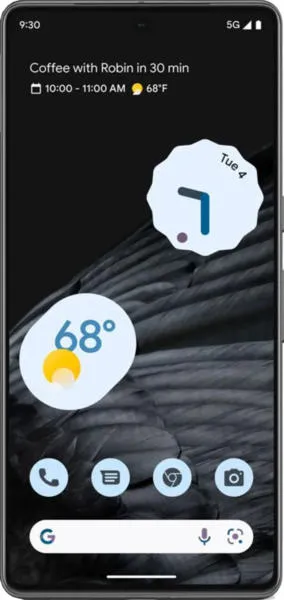
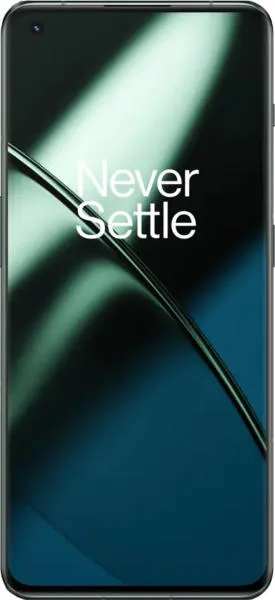
Google Pixel 7 Pro vs. OnePlus 11: A Deep Dive for the Discerning User
The smartphone landscape is fiercely competitive, with new contenders constantly vying for your attention. Today, we dissect two compelling options: the Google Pixel 7 Pro and the OnePlus 11. Both boast impressive specs on paper, but let's delve deeper to uncover what truly sets them apart.
1. Specifications Breakdown
| Feature | Google Pixel 7 Pro | OnePlus 11 | Real-World Implications |
|---|---|---|---|
| Design | |||
| Dimensions (mm) | 162.9 x 76.6 x 8.9 | 163.1 x 74.1 x 8.5 | OnePlus 11 is slightly narrower and thinner. Negligible difference in daily use. |
| Weight (g) | 212 | 205 | OnePlus 11 is marginally lighter. |
| Build Materials | Aluminum frame, Gorilla Glass Victus | Aluminum frame, Gorilla Glass Victus | Comparable durability and premium feel. |
| Display | |||
| Size (inches) | 6.7 | 6.7 | Identical screen real estate. |
| Resolution (px) | 1440 x 3120 | 1440 x 3216 | Virtually indistinguishable sharpness. OnePlus 11 slightly taller due to aspect ratio. |
| Panel Type | LTPO AMOLED | LTPO3 AMOLED | Both offer smooth scrolling and potential for battery savings due to variable refresh rates. LTPO3 on the OnePlus 11 potentially allows for even lower refresh rates, conserving more power. |
| Refresh Rate (Hz) | 120 | 120 | Equally smooth and responsive user experience. |
| Peak Brightness (nits) | 1500 | 1300 | Pixel 7 Pro might be slightly more visible in direct sunlight. |
| Performance | |||
| Chipset | Google Tensor G2 | Snapdragon 8 Gen 2 | Snapdragon 8 Gen 2 generally benchmarks higher in raw performance, potentially leading to faster app loading and smoother gaming. Tensor G2 excels in AI and machine learning tasks, enhancing features like voice recognition and photo processing. |
| CPU | Octa-core (2x2.85 GHz Cortex-X1 & 2x2.35 GHz Cortex-A78 & 4x1.80 GHz Cortex-A55) | Octa-core (1x3.2 GHz Cortex-X3 & 2x2.8 GHz Cortex-A715 & 2x2.8 GHz Cortex-A710 & 3x2.0 GHz Cortex-A510) | Snapdragon 8 Gen 2's newer architecture and higher clock speeds suggest a performance advantage. |
| RAM (GB) | 12 | 8/12/16 | OnePlus offers multiple RAM configurations, providing flexibility for different needs and budgets. |
| Camera | |||
| Main Sensor (MP) | 50 | 50 | Comparable resolution, but sensor and image processing will determine the actual image quality. |
| Telephoto (MP) | 48 | 32 | Pixel's higher resolution telephoto likely delivers superior zoom capabilities. |
| Ultrawide (MP) | 12 | 48 | OnePlus 11 boasts a significantly higher resolution ultrawide, capturing more detail in expansive shots. |
| Battery Life | |||
| Capacity (mAh) | 5000 | 5000 | Similar battery capacity, but real-world endurance will depend on software optimization and usage patterns. |
2. Key Insights
- Performance: The OnePlus 11, powered by the Snapdragon 8 Gen 2, likely offers a noticeable edge in raw processing power. However, the Pixel 7 Pro's Tensor G2 shines in AI-driven tasks, translating to a superior user experience in specific areas like voice assistance, language translation, and computational photography.
- Camera: Both phones pack capable camera systems, but their strengths differ. The Pixel leverages Google's renowned image processing algorithms to consistently produce excellent photos, particularly in challenging lighting conditions. The OnePlus 11 counters with a higher-resolution ultrawide lens and Hasselblad color tuning, potentially appealing to photography enthusiasts who prioritize versatility and specific aesthetic preferences.
- Software: Pixel devices receive timely Android updates and a clean, bloatware-free software experience, while OnePlus offers its OxygenOS, known for customization options.
3. User Profiles and Recommendations
- Pixel 7 Pro: Ideal for users who value a pure Android experience, prioritize camera quality and AI features, and appreciate timely software updates.
- OnePlus 11: Best suited for users seeking top-tier performance for demanding tasks like gaming, prefer a customizable user interface, and desire a high-resolution ultrawide camera.
4. Buying Decision Framework
- What matters most? Prioritize your needs: pure Android vs. customization, raw performance vs. AI smarts, camera versatility vs. consistent image quality.
- What's your budget? Compare pricing across different storage configurations.
- What's your photography style? Consider whether you value point-and-shoot simplicity or prefer more control and versatility in your camera.
My Choice: As Alex Griffin, I would choose the Pixel 7 Pro. While the OnePlus 11 boasts impressive hardware, the Pixel's seamless software experience, consistent camera performance, and focus on AI-driven features align more closely with my priorities. The Tensor G2, while perhaps not as powerful in benchmarks, excels in the real-world tasks I value most: quick voice commands, accurate transcriptions, and stunning photos without fiddling with settings. The timely software updates and clean Android experience are the icing on the cake. For me, the Pixel 7 Pro represents a more holistic and refined user experience.
