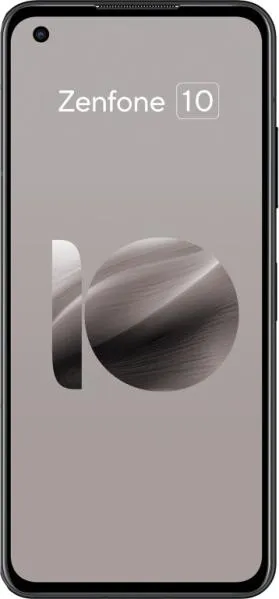

1. Specifications Comparison
| Feature | Asus Zenfone 10 | Oppo Reno11 | Practical Impact |
|---|---|---|---|
| Design | |||
| Dimensions (mm) | 146.5 x 68.1 x 9.4 | 162.4 x 74.3 x 7.9 | Zenfone 10 significantly smaller and more pocketable. Reno11 is taller and wider. |
| Weight (g) | 172 | 182 | Zenfone 10 noticeably lighter, reducing hand fatigue during extended use. |
| Display | |||
| Size (inches) | 5.92 | 6.7 | Zenfone 10 offers a more compact one-handed experience. Reno11 provides a larger viewing area for media consumption. |
| Resolution (px) | 1080 x 2400 | 1080 x 2412 | Similar pixel density due to Zenfone 10's smaller screen; both offer sharp visuals. |
| Refresh Rate (Hz) | 144 | 120 | Zenfone 10's higher refresh rate results in smoother animations and scrolling, especially noticeable in gaming and fast-paced UI interactions. |
| Display Type | Super AMOLED | AMOLED | Both offer vibrant colors and deep blacks. The practical difference between the two AMOLED types is minimal in everyday use. |
| Peak Brightness (nits) | 1100 | 950 | Zenfone 10 might offer slightly better visibility in direct sunlight. |
| Performance | |||
| Chipset | Snapdragon 8 Gen 2 | MediaTek Dimensity 7050 | Zenfone 10's Snapdragon 8 Gen 2 provides significantly superior CPU and GPU performance, resulting in faster app loading, smoother multitasking, and better gaming capabilities. |
| CPU | Octa-core (1x3.2 GHz Cortex-X3 & 2x2.8 GHz Cortex-A715 & 2x2.8 GHz Cortex-A710 & 3x2.0 GHz Cortex-A510) | Octa-core (2x2.6 GHz Cortex-A78 & 6x2.0 GHz Cortex-A55) | Zenfone 10's CPU architecture is newer and more powerful. |
| GPU | Adreno 740 | Mali-G68 MC4 | Zenfone 10's GPU offers considerably better graphics performance for demanding games and applications. |
| RAM (GB) | 8/16 | 12 | Reno11 offers more RAM in its configuration, potentially benefiting multitasking, though the Zenfone 10's superior processor may offset this in real-world usage. |
| Camera | |||
| Main Camera (MP) | 50 (Sony IMX766) | 50 (Sony LYT-600) | Both have high-resolution sensors. Real-world image quality will depend on image processing. |
| Ultrawide (MP) | 13 | 8 | Zenfone's ultrawide offers slightly higher resolution. Reno11 has a dedicated telephoto lens which the Zenfone 10 lacks. |
| Telephoto (MP) | N/A | 32 | Reno11 offers optical zoom capabilities, absent in the Zenfone 10. |
| Video | 8K@24fps, 4K@60fps | 4K@30fps | Zenfone 10 offers higher resolution and frame rate video recording capabilities. |
| Battery | |||
| Capacity (mAh) | 4300 | 5000 | Reno11 has a larger battery capacity, potentially offering longer battery life. However, Zenfone 10's more efficient processor may mitigate this difference. |
2. Key Differences Analysis
Asus Zenfone 10 Advantages:
- Significantly more powerful: The Snapdragon 8 Gen 2 offers a substantial performance advantage for demanding tasks and gaming.
- Smoother display: The 144Hz refresh rate provides a noticeable improvement in fluidity.
- More compact and lighter: Easier to handle and carry.
- Higher resolution and frame rate video recording: Better for capturing high-quality videos.
Oppo Reno11 Advantages:
- Larger battery: Potential for longer battery life.
- Larger display: More immersive for media consumption.
- Telephoto lens: Offers optical zoom for capturing distant subjects.
- Lower starting price: More budget-friendly option.
3. User Profiles & Recommendations
Asus Zenfone 10: Users who prioritize performance, a smooth display, a compact form factor, and high-quality video recording. Ideal for mobile gamers, power users, and those who prefer one-handed operation.
Oppo Reno11: Users who prioritize battery life, a large display for media consumption, optical zoom capabilities, and affordability. Suitable for casual users, media consumers, and those on a tighter budget.
4. Decision Framework
Key Questions for Buyers:
- What is your budget? The Reno11 is more affordable.
- Do you prioritize performance or battery life? The Zenfone 10 excels in performance, while the Reno11 likely has longer battery life.
- Do you prefer a compact phone or a larger screen? The Zenfone 10 is significantly smaller.
Scenario-Based Recommendations:
- Heavy gamer: Zenfone 10 for its superior performance.
- Casual user on a budget: Reno11 for its affordability and larger battery.
- Photographer who values zoom: Reno11 for its telephoto lens.
My Choice: Asus Zenfone 10
While the Oppo Reno11 offers a larger battery and telephoto lens, the Asus Zenfone 10's significantly superior performance, smoother 144Hz display, and more compact form factor are decisive for me. I value a fast and responsive phone for everyday tasks and occasional gaming, and the Zenfone 10 delivers that in a pocketable package. The trade-off of a slightly smaller battery is acceptable considering the Snapdragon 8 Gen 2's efficiency. The lack of a telephoto lens is less of a concern for my personal usage compared to overall performance and handling. The price difference is justifiable for the substantial performance gains and premium features.
