
1. Specifications Comparison
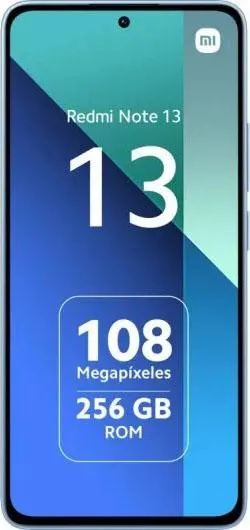
| Feature | Apple iPhone 15 | Xiaomi Redmi Note 13 4G | Practical Impact |
|---|---|---|---|
| Design | |||
| Dimensions | 147.6 x 71.6 x 7.8 mm | 162.3 x 75.6 x 8.0 mm | iPhone 15 is significantly smaller and lighter, making it more pocketable and comfortable for one-handed use. |
| Weight | 171g | 188.5g | Reinforces the portability advantage of the iPhone 15. |
| Build Materials | Not specified | Not specified | Build quality and durability cannot be compared without further information. |
| Display | |||
| Display Size | 6.1" | 6.67" | Redmi Note 13 offers a larger screen for more immersive media consumption and multitasking. |
| Display Type | Super Retina XDR OLED | AMOLED | Both offer excellent color accuracy and deep blacks. |
| Resolution | 1179 x 2556 | 1080 x 2400 | iPhone 15 has a sharper display with higher pixel density (461 ppi vs 395 ppi), resulting in crisper text and images. |
| Refresh Rate | Not specified | 120Hz | Redmi Note 13's 120Hz refresh rate provides smoother scrolling and animations, leading to a more fluid user experience. |
| Peak Brightness | 2000 nits | 1800 nits | iPhone 15 can get significantly brighter, improving outdoor visibility. |
| Performance | |||
| Chipset | Apple A16 Bionic (4 nm) | Qualcomm SM6225 Snapdragon 685 (6 nm) | A16 Bionic is a flagship chipset, significantly more powerful than the Snapdragon 685, resulting in much faster performance for demanding tasks and gaming. |
| CPU | Hexa-core (2x3.46 GHz + 4x2.02 GHz) | Octa-core (4x2.8 GHz + 4x1.9 GHz) | A16's architecture and higher clock speeds provide a significant performance advantage. |
| GPU | Apple GPU (5-core) | Adreno 610 | iPhone 15 will offer a superior gaming and graphics-intensive application experience. |
| RAM | 6GB | 8GB | While Redmi has more RAM, the A16's superior efficiency likely mitigates this difference in real-world usage. |
| Storage | 256GB/512GB | 128GB/256GB | Both offer ample storage options, though the iPhone starts at a higher base storage. |
| Camera | |||
| Rear Camera | Not specified | Not specified | Camera quality cannot be compared without detailed sensor and lens specifications. |
| Video Capabilities | Up to 4K@60fps, 1080p@240fps | 1080p@30fps | iPhone 15 offers significantly better video recording capabilities with higher resolution and frame rates, including slow-motion. |
| Battery | |||
| Capacity | 3349 mAh | 5000 mAh | Redmi Note 13 has a much larger battery, likely resulting in significantly longer battery life. |
2. Key Differences Analysis
iPhone 15 Advantages:
- Significantly more powerful: The A16 Bionic chip offers a substantial performance advantage for demanding tasks, gaming, and future-proofing.
- Sharper and brighter display: Higher resolution and peak brightness result in a superior visual experience.
- More compact and premium design: Smaller dimensions and lighter weight enhance portability.
- Superior video recording: Wider range of resolutions and frame rates.
Redmi Note 13 4G Advantages:
- Longer battery life: The larger 5000 mAh battery will likely last considerably longer on a single charge.
- Larger Display: More immersive experience for media consumption and multitasking.
- Higher Refresh Rate: Smoother scrolling and a more fluid user experience overall.
- Lower starting price: Potentially more affordable depending on specific market pricing. (Based on general trends of these brands).
Trade-offs:
- Performance vs. Battery Life: iPhone 15 prioritizes performance, potentially at the cost of battery life. Redmi Note 13 prioritizes battery life over raw performance.
3. User Profiles & Recommendations
iPhone 15: Users who prioritize performance, a premium experience, compact design, and a vibrant ecosystem. Ideal for demanding tasks, gaming, content creation, and users who value software updates and a seamless user experience.
Redmi Note 13 4G: Users who prioritize battery life, a large display, and affordability. Suitable for everyday tasks, media consumption, social media, and users seeking a long-lasting device without breaking the bank.
4. Decision Framework
Key Questions:
- What is your budget? The iPhone 15 is typically more expensive.
- What are your primary use cases? (Gaming, photography, social media, etc.)
- How important is battery life versus performance?
Scenario-Based Recommendations:
- Heavy user, gamer, content creator: iPhone 15
- Casual user, focused on battery life and affordability: Redmi Note 13 4G
My Choice:
I would choose the iPhone 15. While the Redmi Note 13 4G offers a compelling combination of battery life and a large display, I prioritize performance, a refined software experience, and long-term software support. The A16 Bionic's significant power advantage ensures a smooth and responsive experience for years to come, even with demanding tasks. The sharper display and more compact form factor also align better with my preferences. While battery life is important, I'm willing to make that trade-off for the overall superior performance and user experience offered by the iPhone 15. I also value the robust app ecosystem and consistent software updates provided by Apple.
