
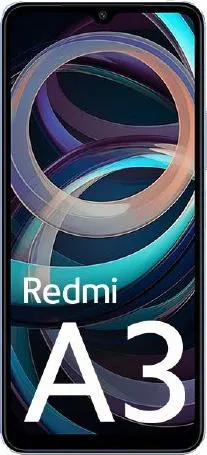
1. Specifications Comparison
| Feature | Apple iPhone 15 | Xiaomi Redmi A3 | Practical Impact |
|---|---|---|---|
| Design | |||
| Dimensions (mm) | 147.6 x 71.6 x 7.8 | 168.3 x 76.3 x 8.3 | iPhone 15 is significantly smaller and thinner, making it more pocketable and easier to handle one-handed. Redmi A3 is larger, potentially better for media consumption but less comfortable for one-handed use. |
| Weight (g) | 171 | 193 | iPhone 15 is noticeably lighter, reducing hand fatigue during extended use. |
| Build Materials | Not specified | Not specified | Material choice impacts durability and premium feel. This information is missing for both phones. |
| Display | |||
| Display Type | Super Retina XDR OLED | IPS LCD | iPhone 15's OLED offers superior contrast, deeper blacks, and more vibrant colors. Redmi A3's IPS LCD is less power-efficient and has poorer color reproduction. |
| Display Size (inches) | 6.1 | 6.71 | Redmi A3 provides a larger screen for immersive media consumption and multitasking. iPhone 15's smaller screen is more compact. |
| Resolution | 1179 x 2556 | 720 x 1650 | iPhone 15 boasts a much sharper display with significantly higher pixel density (461 ppi vs 268 ppi), resulting in crisper text and images. |
| Refresh Rate (Hz) | Not specified | 90 | A higher refresh rate on Redmi A3 results in smoother scrolling and animations. Lack of information on iPhone 15's refresh rate hinders comparison. |
| Peak Brightness (nits) | 2000 | 500 (HBM) / Not specified (Peak) | iPhone 15's significantly higher peak brightness ensures excellent outdoor visibility. Limited brightness information on Redmi A3 makes full comparison difficult, but 500 nits suggests struggles in direct sunlight. |
| Performance | |||
| Chipset | Apple A16 Bionic (4 nm) | Mediatek Helio G36 (12 nm) | A16 Bionic is a significantly more powerful chip, offering superior performance in demanding tasks, gaming, and multitasking. Helio G36 is a budget-focused chip with lower performance. |
| CPU | Hexa-core (2x3.46 GHz Everest + 4x2.02 GHz Sawtooth) | Octa-core (4x2.2 GHz Cortex-A53 & 4x1.6 GHz Cortex-A53) | iPhone 15's CPU architecture and higher clock speeds translate to much faster processing. |
| GPU | Apple GPU (5-core graphics) | PowerVR GE8320 | iPhone 15's GPU provides significantly better graphics performance for gaming and visually demanding applications. |
| RAM | 6GB | 4GB/6GB | While both offer sufficient RAM for everyday tasks, the 6GB standard on the iPhone 15 and availability of 6GB on Redmi A3 can benefit multitasking and demanding applications. |
| Storage | 256GB/512GB | 128GB | iPhone 15 offers more base storage. |
| Camera | |||
| Video Capabilities | Up to 4K@60fps (HDR), 1080p@240fps (HDR) | 1080p@30fps | iPhone 15 supports higher resolution and frame rate video recording with HDR, offering superior video quality. More details on specific camera sensors and features are needed for a complete comparison. |
| Battery | |||
| Capacity (mAh) | 3349 | 5000 | Redmi A3 has a much larger battery capacity, potentially offering significantly longer battery life. Real-world battery life depends on usage and optimization. |
2. Key Differences Analysis
iPhone 15 Advantages:
- Significantly higher performance: The A16 Bionic chip provides a substantial performance advantage for demanding tasks and gaming.
- Superior display: The OLED screen offers vibrant colors, deep blacks, and higher resolution.
- Premium design: More compact and lighter build (though materials are unspecified).
- Advanced video recording capabilities: Higher resolution and frame rate with HDR.
Redmi A3 Advantages:
- Larger battery: Potentially much longer battery life.
- Larger display: More immersive experience for media consumption.
- Lower price: Significantly more affordable (based on "low price" vs. "medium price" categories).
- Higher refresh rate display: Smoother scrolling and animations
3. User Profiles & Recommendations
iPhone 15: Users who prioritize performance, a premium display, a compact design, and advanced camera features. Ideal for demanding tasks, gaming, content creation, and those who value a polished user experience.
Redmi A3: Budget-conscious users who prioritize battery life and a large screen for media consumption. Suitable for everyday tasks, social media, web browsing, and light gaming.
4. Decision Framework
Key Questions for Buyers:
- What is your budget? The Redmi A3 is significantly more affordable.
- What are your primary use cases? Gaming and demanding tasks favor the iPhone 15. Media consumption and long battery life favor the Redmi A3.
- Do you prioritize performance or battery life? iPhone 15 excels in performance, while Redmi A3 likely offers longer battery life.
My Choice:
I would choose the iPhone 15. While the Redmi A3 offers a compelling value proposition with its large battery and display, my priorities lie with performance, a premium display, and a polished user experience. The A16 Bionic's significant performance advantage, coupled with the superior OLED display and more compact design, makes the iPhone 15 a better fit for my needs. I am willing to pay the premium for the better overall experience and longevity offered by the iPhone, even with its smaller battery. I frequently use my phone for demanding tasks, photography, and value a smooth and responsive user interface, making the iPhone 15 the clear winner for me. While battery life is important, I am confident I can manage with the iPhone 15's battery given my usage patterns and access to charging solutions.
