
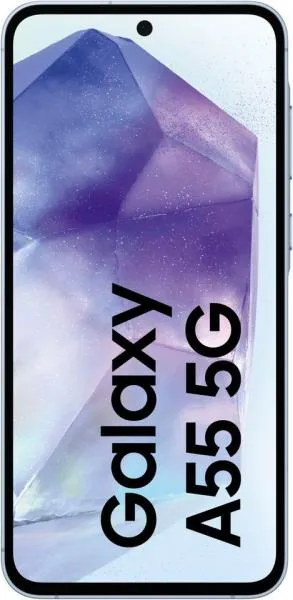
1. Specifications Comparison
| Feature | Apple iPhone 15 | Samsung Galaxy A55 | Practical Impact |
|---|---|---|---|
| Design | |||
| Dimensions | 147.6x71.6x7.8mm | 161.1x77.4x8.2mm | iPhone 15 is significantly smaller and lighter, easier for one-handed use and pocket portability. A55 offers a larger screen but might feel bulky. |
| Weight | 171g | 213g | Reinforces the portability advantage of the iPhone 15. |
| Build | Not specified | Not specified | Material differences could impact durability and premium feel, but we lack data for comparison. |
| Display | |||
| Size | 6.1" | 6.6" | A55 provides more screen real estate for media consumption and multitasking, while the iPhone 15 prioritizes compactness. |
| Type | Super Retina XDR OLED | Super AMOLED | Both are high-quality display technologies with vibrant colors and deep blacks. |
| Resolution | 1179x2556 | 1080x2340 | iPhone 15 boasts a sharper display (461 ppi vs 390 ppi) resulting in crisper text and images. |
| Refresh Rate | Not specified | 120Hz | 120Hz on the A55 results in smoother animations and scrolling compared to a standard 60Hz likely on the iPhone 15 (though not confirmed). This significantly impacts perceived responsiveness. |
| Peak Brightness | 2000 nits | Not specified | iPhone 15's superior peak brightness ensures better visibility in direct sunlight. Lack of A55 data prevents full comparison. |
| Performance | |||
| Chipset | Apple A16 Bionic (4 nm) | Exynos 1480 (4 nm) | A16 is generally considered a more powerful chip, likely leading to faster app loading, smoother multitasking, and better gaming performance. Real-world benchmarks needed for definitive comparison. |
| CPU | Hexa-core (2x3.46 GHz Everest + 4x2.02 GHz Sawtooth) | Octa-core (4x2.75 GHz Cortex-A78 & 4x2.0 GHz Cortex-A55) | Core count doesn't directly translate to performance; A16's architecture and optimization likely give it an edge. |
| GPU | Apple GPU (5-core graphics) | Xclipse 530 | A16's GPU is likely more powerful, beneficial for graphically demanding games and tasks. |
| RAM | 6GB | 8GB/12GB | A55's larger RAM options potentially allow for more apps to remain in memory, reducing reloading. However, iOS memory management differs from Android, so direct comparison is complex. |
| Battery | |||
| Capacity | 3349 mAh | 5000 mAh | A55's significantly larger battery likely translates to considerably longer battery life. |
| Other | |||
| OS | iOS 17 | Android 14 | OS preference is subjective. iOS is known for simplicity and a tightly controlled ecosystem, while Android offers more customization and flexibility. |
| Storage | 256GB/512GB | 256GB | Both offer ample storage for average users. |
2. Key Differences Analysis
iPhone 15 Advantages:
- Compact Form Factor: Significantly smaller and lighter for better one-handed use.
- Sharper Display: Higher resolution for crisper visuals.
- Higher Peak Brightness: Enhanced outdoor visibility.
- Likely Superior Performance: A16 Bionic chip generally outperforms Exynos 1480.
Samsung Galaxy A55 Advantages:
- Larger Display: More immersive experience for media and multitasking.
- Higher Refresh Rate: Smoother animations and scrolling.
- Significantly Larger Battery: Potentially much longer battery life.
- More RAM: Potential for improved multitasking, though OS differences complicate direct comparison.
Trade-offs:
- iPhone 15: Smaller battery for potentially shorter battery life; potentially lower refresh rate.
- A55: Larger and heavier; lower resolution display; potentially less powerful chipset.
3. User Profiles & Recommendations
iPhone 15: Users who prioritize a compact, premium phone with a sharp display, strong performance, and value iOS ecosystem. Ideal for one-handed use, portability, and users who prioritize performance over battery life.
Samsung Galaxy A55: Users who prefer a larger display for media consumption and multitasking, prioritize long battery life, and value a customizable operating system. Ideal for users who watch a lot of videos, play mobile games extensively, and need all-day battery life.
4. Decision Framework
Key Questions:
- What screen size and portability do you prefer? Compact or larger display?
- How important is battery life to you? All-day use or frequent charging acceptable?
- Which operating system do you prefer? iOS or Android?
Scenario-Based Recommendations:
- Heavy media consumer: Samsung Galaxy A55 for its larger display and battery.
- One-handed use and portability: iPhone 15 for its compact size.
- Performance focused user: iPhone 15 likely offers a performance advantage.
- Budget-conscious user with battery life priority: Samsung Galaxy A55.
My Choice: iPhone 15
While the Samsung A55 offers a tempting larger display and battery, I would choose the iPhone 15. The A16 Bionic's superior performance, combined with the iPhone's compact form factor and sharper display, are more aligned with my personal priorities. I value a smooth and responsive user experience, which the A16 is likely to deliver more consistently. While the A55's 120Hz refresh rate is attractive, I'm willing to compromise on that for the overall performance and portability benefits of the iPhone 15. I also prefer the iOS ecosystem. Ultimately, the decision hinges on individual needs and priorities, but for me, the iPhone 15 strikes the best balance.
