
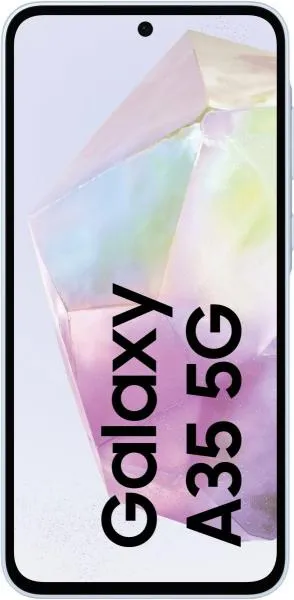
1. Specifications Comparison
| Feature | Apple iPhone 15 | Samsung Galaxy A35 | Practical Impact |
|---|---|---|---|
| Design | |||
| Dimensions | 147.6x71.6x7.8mm | 161.7x78x8.2mm | iPhone 15 is significantly smaller and lighter, easier for one-handed use and pocket portability. A35 is larger, offering a bigger screen. |
| Weight | 171g | 209g | iPhone 15 is noticeably lighter, reducing hand fatigue during extended use. |
| Build Material | Not specified | Not specified | Build quality and durability are unclear without material information. |
| Display | |||
| Size | 6.1" | 6.6" | A35 offers a larger viewing area for media consumption and multitasking. |
| Type | Super Retina XDR OLED | Super AMOLED | Both offer vibrant colors and deep blacks. Practical differences might be subtle in real-world usage. |
| Resolution | 1179x2556 | 1080x2340 | iPhone 15 has a sharper display due to higher pixel density (461 ppi vs 390 ppi). |
| Refresh Rate | Not specified | 120Hz | A35's 120Hz provides smoother scrolling and animations, enhancing the user experience. iPhone refresh rate is unknown. |
| Peak Brightness | 2000 nits | 1000 nits | iPhone 15 can get significantly brighter, improving outdoor visibility. |
| Performance | |||
| Chipset | Apple A16 Bionic (4 nm) | Exynos 1380 (5 nm) | A16 is generally considered a more powerful chip, potentially leading to better performance in demanding tasks and gaming. |
| CPU | Hexa-core | Octa-core | Core count alone doesn't determine performance; architecture and clock speeds also matter. A16 is likely faster. |
| GPU | Apple GPU (5-core) | Mali-G68 MP5 | A16's GPU is expected to deliver superior graphics performance. |
| RAM | 6GB | 8GB | A35 has more RAM, which can improve multitasking and app switching performance. |
| Storage | 256GB/512GB | 128GB/256GB | Both offer ample storage, but iPhone 15 starts with a larger base storage option. |
| Battery | |||
| Capacity | 3349 mAh | 5000 mAh | A35 has significantly larger battery capacity, likely resulting in longer battery life. |
| Other | |||
| OS | iOS 17 | Android 14 | OS preference is subjective, each offers distinct features and ecosystems. |
| Sensors | Face ID, ... | Fingerprint, ... | Biometric authentication options differ; user preference will vary. iPhone lacks fingerprint sensor. |
| Video Capabilities | Up to 4K@60fps, HDR | Up to 4K@30fps, EIS | iPhone 15 offers higher resolution and frame rate video recording with HDR. |
2. Key Differences Analysis
iPhone 15 Advantages:
- Performance: Likely more powerful due to the A16 Bionic chip.
- Display: Sharper screen with higher peak brightness.
- Premium Feel: Typically uses higher quality materials (though not specified here).
- Compact Design: Smaller and lighter, better for one-handed use.
- Video Recording: Superior video capabilities.
Samsung Galaxy A35 Advantages:
- Battery Life: Significantly larger battery capacity.
- Larger Display: More screen real estate for media consumption.
- Higher Refresh Rate: Smoother scrolling and animations.
- More RAM: Better multitasking performance.
- Potentially Lower Price: Though both are "medium price," Samsung A series is typically more affordable.
3. User Profiles & Recommendations
iPhone 15: Users prioritizing performance, a premium compact design, a bright and sharp display, and excellent video recording capabilities. Ideal for power users, content creators, and those who prefer iOS.
Samsung Galaxy A35: Users who value long battery life, a large display for media consumption, smooth scrolling, and good multitasking performance. Suitable for casual users, students, and those on a budget who prioritize these features.
4. Decision Framework
Key Questions:
- What is your budget? Compare actual prices, as "medium price" is subjective.
- What is most important to you: performance, battery life, display size, or camera?
- Do you prefer iOS or Android?
Scenario-Based Recommendations:
- Heavy user who needs top performance: iPhone 15
- User prioritizing battery life and a large screen: Samsung Galaxy A35
- Budget-conscious user who needs a good all-rounder: Samsung Galaxy A35 likely offers better value.
My Choice: iPhone 15
Reasoning: While the A35 offers compelling features like a larger battery and 120Hz display, I prioritize performance and a premium, compact design. The A16 Bionic's significant performance advantage, coupled with the iPhone's sharper display and superior video capabilities, outweighs the A35's advantages for my personal use. I also value the generally smoother and more optimized iOS experience. While battery life is important, I'm willing to compromise in this area for the overall performance and user experience offered by the iPhone 15. This is a subjective choice, and a user prioritizing battery life above all else might reach a different conclusion.
