
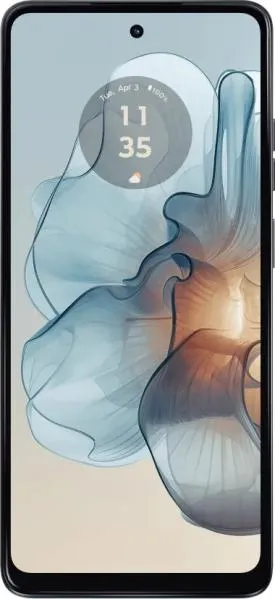
1. Specifications Comparison
| Feature | Apple iPhone 15 | Motorola Moto G24 Power | Practical Impact |
|---|---|---|---|
| Design | |||
| Dimensions | 147.6 x 71.6 x 7.8 mm | 163.5 x 74.5 x 9 mm | iPhone 15 is significantly smaller and thinner, making it more pocketable and easier to handle. |
| Weight | 171 g | 197 g | iPhone 15 is noticeably lighter, reducing hand fatigue during extended use. |
| Build Materials | Not specified | Not specified | Build quality and durability are unknown without material information. |
| Display | |||
| Display Type | Super Retina XDR OLED | IPS LCD | iPhone 15's OLED offers superior contrast, deeper blacks, and wider viewing angles compared to the Moto G24 Power's LCD. |
| Size | 6.1" | 6.56" | Moto G24 Power provides a larger screen for media consumption but reduces one-handed usability. |
| Resolution | 1179 x 2556 | 720 x 1612 | iPhone 15 has a much sharper display with higher pixel density (461 ppi vs 269 ppi), resulting in crisper text and images. |
| Refresh Rate | Not specified | 90Hz | A 90Hz refresh rate on the Moto G24 Power results in smoother scrolling and animations compared to a standard 60Hz (assuming iPhone 15 is 60Hz). |
| Peak Brightness | 2000 nits | 537 nits | iPhone 15's significantly higher peak brightness ensures excellent outdoor visibility. |
| Performance | |||
| Chipset | Apple A16 Bionic (4 nm) | Mediatek MT6769Z Helio G85 (12 nm) | A16 Bionic is a flagship chipset, significantly more powerful than the Helio G85, enabling smoother multitasking, faster app launches, and better gaming performance on the iPhone 15. |
| CPU | Hexa-core (2x3.46 GHz + 4x2.02 GHz) | Octa-core (2x2.0 GHz + 6x1.7 GHz) | A16's higher clock speeds and architecture deliver superior processing power. |
| GPU | Apple GPU (5-core) | Mali-G52 MC2 | iPhone 15's GPU offers substantially better graphics performance for demanding games and applications. |
| RAM | 6GB | 8GB | While Moto G24 Power has more RAM, the A16's superior memory management likely results in better real-world performance. |
| Camera | |||
| Video Capabilities | Up to 4K@60fps, 1080p@240fps | 1080p@30fps | iPhone 15 offers significantly better video recording capabilities with higher resolution, frame rates, and HDR support. Specific sensor details are missing for both phones, limiting a complete camera comparison. |
| Battery | |||
| Capacity | 3349 mAh | 6000 mAh | Moto G24 Power has a much larger battery, likely providing significantly longer battery life. |
2. Key Differences Analysis
iPhone 15 Advantages:
- Significantly higher performance: The A16 Bionic chipset delivers a superior user experience across all tasks.
- Premium Display: OLED technology with higher resolution, brightness, and wider color gamut provides a vastly improved visual experience.
- Superior Video Recording: Offers higher resolution, frame rates, and HDR support.
- More Compact Design: Easier to handle and carry.
Moto G24 Power Advantages:
- Much longer battery life: The 6000 mAh battery is a major advantage for users who prioritize all-day usage.
- Lower price: Offers a budget-friendly option for price-sensitive consumers.
- Higher refresh rate: Smoother scrolling and animations compared to a standard 60Hz display.
3. User Profiles & Recommendations
iPhone 15: Users who prioritize performance, premium display quality, compact design, and a seamless user experience. Ideal for demanding tasks, gaming, and content creation.
Moto G24 Power: Users who prioritize battery life above all else and are on a tight budget. Suitable for basic tasks like browsing, social media, and communication.
4. Decision Framework
Key Questions:
- What is your budget? The iPhone 15 is significantly more expensive.
- What are your primary use cases? Demanding tasks vs. basic usage.
- Which features are most important to you? Performance, battery life, display quality, or price?
My Choice: Apple iPhone 15
While the Moto G24 Power's battery life is tempting, the iPhone 15's superior performance, display, and overall user experience are more important to me. I prioritize a smooth and responsive phone for everyday tasks, gaming, and content consumption. The compact form factor is also a plus. While the price difference is significant, I believe the iPhone 15 offers greater long-term value due to its performance and longevity. The significantly improved display and more powerful chip make a huge difference in daily use, and I'm willing to compromise on battery life for that. A portable charger can mitigate the battery life difference.
