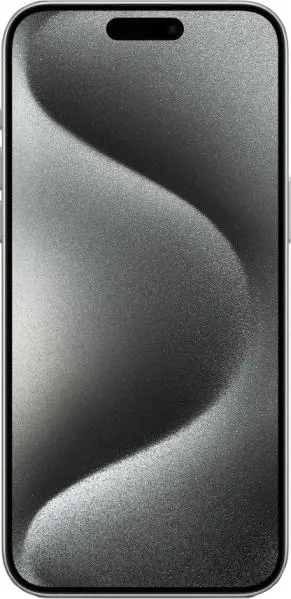
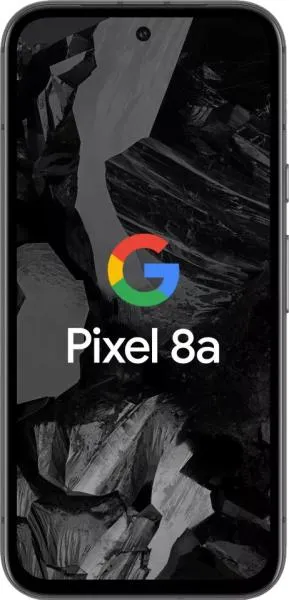
1. Specifications Comparison
| Feature | Category | Apple iPhone 15 Pro Max | Google Pixel 8a | Practical Impact |
|---|---|---|---|---|
| Dimensions | Design | 159.9 x 76.7 x 8.3 mm | 152.1 x 72.7 x 8.9 mm | Pixel 8a is noticeably smaller and potentially easier to handle one-handed. iPhone 15 Pro Max is slightly thinner. |
| Weight | Design | 221g | 188g | Pixel 8a is significantly lighter, reducing hand fatigue during extended use. |
| Build | Design | Titanium frame | Not specified | iPhone's titanium frame offers superior durability and premium feel, but we lack details on the Pixel 8a's build for a complete comparison. |
| Display Size | Display | 6.7" | 6.1" | iPhone offers a larger screen for more immersive media consumption and multitasking, while Pixel 8a provides better one-handed usability. |
| Display Type | Display | LTPO Super Retina XDR OLED | OLED | Both offer high-quality OLED displays with vibrant colors and deep blacks. iPhone's LTPO technology allows for dynamic refresh rate adjustment, potentially saving battery. |
| Resolution | Display | 1290 x 2796 | 1080 x 2400 | iPhone boasts a sharper display with higher pixel density (460 ppi vs 430 ppi), resulting in crisper text and images. |
| Peak Brightness | Display | 2000 nits (HBM) | 2000 nits (peak) | Both offer excellent peak brightness for outdoor visibility. |
| Refresh Rate | Display | 120Hz | 120Hz | Both displays offer smooth scrolling and animations thanks to the 120Hz refresh rate. |
| Chipset | Performance | Apple A17 Pro (3 nm) | Google Tensor G3 (4 nm) | A17 Pro is expected to offer superior performance and efficiency due to its advanced 3nm manufacturing process. However, real-world performance depends on optimization. |
| CPU | Performance | Hexa-core (2x3.78 GHz + 4x2.11 GHz) | Nona-core (1x3.0 GHz Cortex-X3 & 4x2.45 GHz Cortex-A715 & 4x2.15 GHz Cortex-A510) | Core count differences don't directly translate to performance. A17 Pro's architecture and higher clock speeds likely result in faster processing. |
| GPU | Performance | Apple GPU (6-core graphics) | Immortalis-G715s MC10 | Specific GPU performance comparisons require benchmarks. Apple traditionally excels in GPU performance, but Tensor G3 is optimized for AI tasks. |
| RAM | Performance | 8GB | 8GB | Both phones offer ample RAM for smooth multitasking. |
| Storage | Performance | 512GB/1TB | 256GB | iPhone offers larger storage options for users who need to store a lot of media or files. |
| Battery Capacity | Battery | 4441 mAh | 4492 mAh | Pixel 8a has a slightly larger battery capacity, but real-world battery life depends on software optimization and usage patterns. |
| OS | Software | iOS 17 | Android 14 | iOS is known for its simplicity and tight hardware-software integration, while Android offers greater customization and flexibility. This is a matter of personal preference. |
| Price | Value | High | Medium | Pixel 8a offers a significantly lower price point, making it a more accessible option. |
2. Key Differences Analysis
iPhone 15 Pro Max Advantages:
- Premium Build & Design: Titanium frame offers superior durability.
- Sharper Display: Higher resolution and pixel density for a crisper viewing experience.
- Expected Superior Performance: A17 Pro chip likely outperforms Tensor G3 in demanding tasks.
- Larger Storage Options: Caters to users with high storage demands.
Pixel 8a Advantages:
- Lower Price: More budget-friendly option.
- Lighter and More Compact: Easier for one-handed use and portability.
- Slightly Larger Battery: Potentially longer battery life, depending on usage.
- Android Flexibility: Offers customization options and wider app ecosystem compatibility.
Trade-offs:
- Choosing the Pixel 8a means compromising on performance, display sharpness, build materials, and storage options for a lower price.
- Choosing the iPhone 15 Pro Max means paying a premium for a top-tier device with the best performance, display, and build quality.
3. User Profiles & Recommendations
iPhone 15 Pro Max: Ideal for users who prioritize performance, a premium experience, the best display quality, and don't mind the higher price tag. Excellent for demanding tasks, mobile gaming, content creation, and users who value a polished and seamless user experience.
Pixel 8a: Ideal for budget-conscious users who prioritize a compact and lightweight phone with a good display and decent performance. Suitable for everyday tasks, social media, web browsing, and users who value affordability and Android's flexibility.
4. Decision Framework
Key Questions:
- What is your budget? The Pixel 8a offers excellent value for its price, while the iPhone 15 Pro Max commands a premium.
- What are your performance needs? For demanding tasks and gaming, the iPhone 15 Pro Max is the clear winner. For everyday use, the Pixel 8a is sufficient.
- What operating system do you prefer? iOS and Android offer distinct experiences. Consider your familiarity and preferences for customization and app ecosystems.
Scenario-Based Recommendations:
- Heavy user, gamer, content creator: iPhone 15 Pro Max
- Budget-conscious, casual user: Pixel 8a
- Prioritizes compact size and lightweight design: Pixel 8a
My Choice:
I would choose the iPhone 15 Pro Max. While the Pixel 8a offers excellent value, I prioritize performance, a premium build, and the best possible display quality. The A17 Pro chip's expected performance gains and the superior display make the iPhone 15 Pro Max a more compelling device for my needs. I am willing to pay the premium for the long-term benefits of a more powerful and future-proof device. While I appreciate the Pixel 8a's compact size and lower price, these factors are less important to me than overall performance and build quality. The larger storage options on the iPhone are also beneficial for my workflow.
