
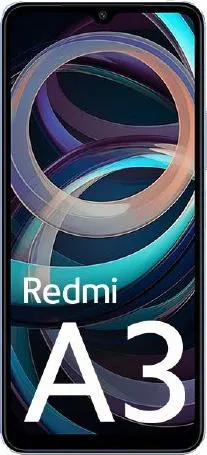
1. Specifications Comparison
| Feature | Apple iPhone 15 Plus | Xiaomi Redmi A3 | Practical Impact |
|---|---|---|---|
| Design | |||
| Dimensions | 160.9 x 77.8 x 7.8 mm | 168.3 x 76.3 x 8.3 mm | iPhone 15 Plus is slightly shorter, narrower, and thinner. Redmi A3 is slightly taller and thicker. Negligible difference in hand feel for most users. |
| Weight | 201g | 193g | Redmi A3 is slightly lighter, but the difference is minimal. |
| Build Materials | Not specified | Not specified | Build quality and durability cannot be compared without further information. |
| Display | |||
| Display Type | Super Retina XDR OLED | IPS LCD | iPhone's OLED offers significantly better contrast, deeper blacks, and wider viewing angles, resulting in a superior visual experience. |
| Display Size | 6.7" | 6.71" | Virtually identical screen sizes. |
| Resolution | 1290 x 2796 | 720 x 1650 | iPhone has a much sharper display (460 ppi vs 268 ppi), resulting in crisper text and images. Redmi's lower resolution will be noticeable in everyday use. |
| Refresh Rate | Not specified | 90Hz | A higher refresh rate on the Redmi A3 leads to smoother scrolling and animations, though the iPhone's likely 60Hz with ProMotion (dynamic refresh rate up to 120Hz not specified here) can provide similar smoothness in some scenarios. |
| Peak Brightness | 2000 nits | 500 nits | iPhone's significantly higher peak brightness ensures better visibility outdoors and in bright conditions. |
| Performance | |||
| Chipset | Apple A16 Bionic (4 nm) | Mediatek Helio G36 (12 nm) | A16 is significantly more powerful, enabling smoother multitasking, faster app loading, and better gaming performance. |
| CPU | Hexa-core (2x3.46 GHz + 4x2.02 GHz) | Octa-core (4x2.2 GHz + 4x1.6 GHz) | While Redmi A3 has more cores, the A16's architecture and higher clock speeds result in superior performance. |
| GPU | Apple GPU (5-core) | PowerVR GE8320 | Apple's GPU is significantly more powerful, enabling smoother gaming and graphics-intensive tasks. |
| RAM | 6GB | 4GB/6GB | While both offer options for sufficient RAM, 6GB is generally better for multitasking. |
| Storage | 256GB/512GB | 128GB | iPhone offers larger storage options. |
| Battery | |||
| Capacity | 4383 mAh | 5000 mAh | Redmi A3 has a larger battery capacity, potentially offering longer battery life. However, real-world battery life depends on optimization and usage patterns. |
| Camera | |||
| Video Capabilities | Up to 4K@60fps (HDR), 1080p@240fps (HDR) | 1080p@30fps | iPhone offers significantly better video recording capabilities with higher resolution, frame rates, and HDR support. |
| Other Camera Specs | Not specified for both | Not specified for both | Camera quality cannot be comprehensively compared without further information about sensor size, aperture, and features. |
2. Key Differences Analysis
iPhone 15 Plus Advantages:
- Significantly better display: Superior OLED technology, higher resolution, and much higher peak brightness.
- Much more powerful performance: A16 Bionic chipset provides a substantial advantage in speed and graphics.
- Superior video recording capabilities: Higher resolution, frame rates, and HDR support.
- More premium design: Though materials aren't specified, iPhones generally have a more premium feel.
Redmi A3 Advantages:
- Larger battery capacity: Potentially longer battery life, though real-world usage will vary.
- Lower price: Redmi A3 is explicitly in a lower price range.
- Higher refresh rate display: Smoother scrolling and animations.
3. User Profiles & Recommendations
iPhone 15 Plus: Users who prioritize performance, display quality, premium design, and a robust app ecosystem. Ideal for demanding tasks, gaming, content creation, and consuming media.
Redmi A3: Budget-conscious users who prioritize basic functionality, long battery life, and a large screen. Suitable for everyday tasks like browsing, social media, and casual gaming.
4. Decision Framework
Key Questions:
- What is your budget? The iPhone 15 Plus is significantly more expensive.
- What are your primary use cases? Demanding tasks and content creation favor the iPhone, while basic usage favors the Redmi A3.
- How important is display quality and performance? The iPhone significantly outperforms the Redmi A3 in these areas.
My Choice: Apple iPhone 15 Plus
While the Redmi A3 offers a larger battery and lower price, the iPhone 15 Plus's superior performance, stunning display, and overall more refined experience make it the clear winner for me. I prioritize a smooth and responsive user interface, high-quality visuals, and the ability to handle demanding tasks without lag. The price difference is significant, but the long-term value and user experience offered by the iPhone 15 Plus justify the investment for my needs. The A16 Bionic chip's significant performance advantage ensures future-proofing for demanding apps and games. The vastly superior display quality is something I interact with constantly and greatly value. While battery life is important, I'd rather carry a power bank than compromise on performance and display quality.
