iPhone 17
Overview
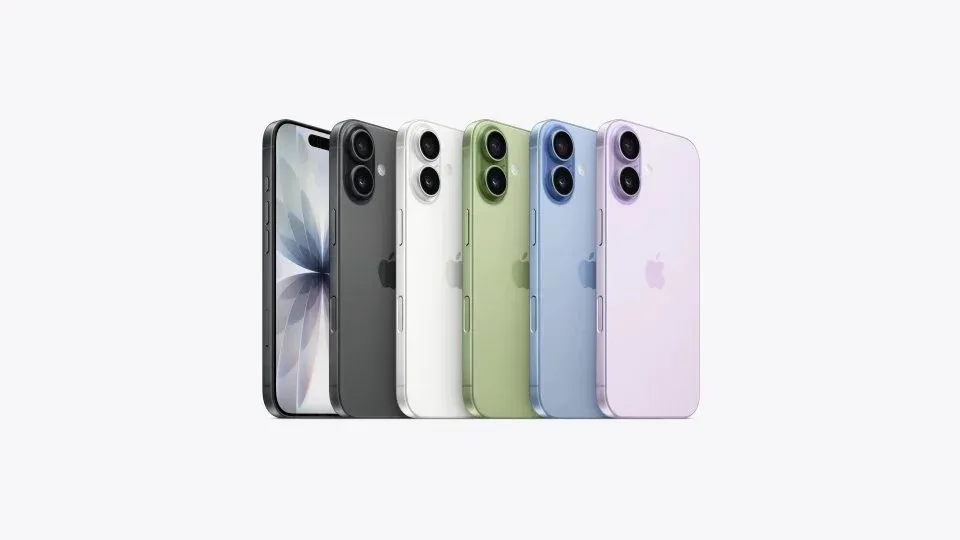
The iPhone 17 is a 2025 smartphone from Apple. It features a 6.3" Oled Super Retina XDR display with 1206 x 2622 px resolution (458 ppi pixel density), offering a smooth 120 Hz refresh rate and impressive peak brightness of 3000 nits. The device is powered by the Apple A19 (3 nm process), 8GB RAM and 5 core GPU GPU. Power is provided by a 3692 mAh Li-Ion battery with 40W fast charging. The phone runs on iOS 26. Available in multiple configurations: 8GB RAM + 256GB storage, 8GB RAM + 512GB storage.
iPhone 17 Review
iPhone 17 Review
The iPhone 17, based on the supplied specifications, looks like Apple’s mainstream 2025 iPhone: compact enough to use comfortably, fast enough to feel flagship-grade, and finally equipped with a modern 120Hz LTPO OLED display rather than saving smooth scrolling for the Pro line. At around €782, it sits in the upper-midrange / entry-flagship tier, where buyers expect excellent performance, long software support, strong cameras, and few obvious compromises.
The biggest story here is balance: a bright 6.3-inch OLED screen, Apple’s new A19 chip, 8GB of RAM, 256GB base storage, wireless charging, and broad global connectivity. But the spec sheet also leaves some important gaps — especially around the rear camera system, charging behavior, and long-term software support — so some conclusions require hands-on testing.
1. Specifications Overview
Design
| Feature | Specification | Practical Impact |
|---|---|---|
| Dimensions | 149.6 × 71.5 × 7.8 mm | This is a relatively compact modern phone. It should be easier to handle one-handed than large 6.7-inch-plus models, while still offering a roomy screen. |
| Weight | 177 g | Light enough for comfortable daily use and long reading sessions. It should feel less tiring than heavier Pro Max-style phones. |
| Build protection | Ceramic Shield / Corning Gorilla Glass, scratch-resistant, oleophobic coating | The front glass should resist everyday scratches and drops better than basic glass, though a case and screen protector are still wise. The oleophobic coating helps reduce fingerprint smears. |
| Colors | Not specified | Color choice is unclear from the provided specs, so buyers should check regional listings before deciding. |
| Ports | USB charging supported; USB Type-C listed as “false” | This is ambiguous. The sheet says USB charging is supported but does not confirm USB-C. Do not assume port type or data speed from this information alone. |
| Audio jack | No 3.5mm headphone jack | Wired headphone users will need wireless earbuds or an adapter. This is normal for modern iPhones but still a compromise. |
| Foldable | No | Traditional slab design; no foldable multitasking or large inner display. |
Display
| Feature | Specification | Practical Impact |
|---|---|---|
| Screen size | 6.3-inch OLED Super Retina XDR | A good middle ground: big enough for video, maps, and messaging, but not as pocket-stretching as larger flagships. |
| Resolution | 1206 × 2622 pixels | Sharp enough that text, photos, and UI elements should look crisp. This is comfortably beyond what most people can distinguish at normal viewing distance. |
| Pixel density | 458 ppi | Very sharp. You should not see individual pixels in normal use. |
| Refresh rate | 120Hz LTPO | Scrolling, animations, and gaming should feel much smoother than 60Hz iPhones. LTPO can lower refresh rate when the screen is static, helping reduce battery drain. |
| Brightness | 1000 nits typical, 3000 nits peak | Strong outdoor visibility is likely, especially for short bursts in sunlight. Peak brightness is not the same as sustained brightness, so real-world heat and dimming still need testing. |
| HDR support | HDR10+, Dolby Vision, HLG | Great for streaming HDR video and viewing high-dynamic-range photos. Bright highlights and deep blacks should look punchy on supported content. |
| Always-On Display | Supported | Lets you glance at time, widgets, and notifications without fully waking the phone. Convenient, but it can consume some battery. |
| Color features | DCI-P3, True Tone | Wide color support helps photos and videos look rich, while True Tone adjusts warmth to ambient lighting for easier reading. |
| Contrast ratio | 2,000,000:1 | OLED blacks should look truly black, improving movies, dark mode, and nighttime reading. |
| Notch / cutout | Hole-punch notch listed | The exact front design is unclear from the wording, but there is some form of display cutout. It may affect full-screen video or gaming slightly. |
Performance
| Feature | Specification | Practical Impact |
|---|---|---|
| Chipset | Apple A19 | This should be a very fast chip for everyday use, gaming, camera processing, and AI-related features. Apple’s chips typically age well, though real thermal behavior needs testing. |
| CPU | 6-core, TSMC N3P, up to 4GHz | Built on an advanced 3nm-class process, which should help with both speed and efficiency. Day-to-day tasks should feel instant. |
| GPU | 5-core GPU | Should handle demanding games, high-refresh UI, and video editing well, though it may sit below Pro-tier Apple GPUs if Apple reserves stronger graphics for higher models. |
| RAM | 8GB | Helpful for multitasking, keeping apps alive in memory, and supporting newer iOS features. It is solid for an iPhone at this tier. |
| Storage | 256GB NVMe base; 512GB versions available | 256GB is a generous starting point for photos, 4K video, apps, and offline media. NVMe storage should make app loading and file operations feel quick. |
| Expandable storage | No microSD slot | Choose storage carefully at purchase. If you shoot lots of video or keep large games offline, 512GB may be safer. |
| Benchmark | AnTuTu v11: 2,239,708 | Indicates flagship-class performance, but benchmarks do not guarantee sustained speed under heat. Gaming stability needs real-world testing. |
| Cooling system | Listed as supported | Suggests Apple has some thermal management hardware, which may help sustained gaming and video capture. The effectiveness cannot be judged from the spec sheet alone. |
| Operating system | iOS 26 | You get Apple’s latest software generation at launch. The maximum supported version is not specified, but iPhones generally receive long update support. |
| Sensors | Accelerometer, gyro, proximity, compass, barometer, light sensor | Covers the essentials for auto-brightness, fitness tracking, navigation, gaming motion controls, and AR-style experiences. |
Camera
| Feature | Specification | Practical Impact |
|---|---|---|
| Rear camera information | 48MP “Wide Angle + Macro,” Sony IMX972, f/2.2, 1/2.55-inch sensor | This appears to describe an ultra-wide/macro-type camera rather than a full rear camera system. The 48MP number can help with detail in good light, but the relatively small sensor and f/2.2 aperture may limit low-light performance. |
| Macro capability | Listed via Wide Angle + Macro | Useful for close-up shots of food, flowers, textures, and small objects. Quality will depend heavily on focus distance and image processing. |
| Selfie camera | 18MP Sony IMX914, f/1.9, 0.96µm pixels | Should be capable for selfies, video calls, and social content. The f/1.9 aperture is reasonably bright, but low-light selfie quality depends on processing and stabilization. |
| Video capabilities | Not specified | A major missing detail. We cannot assess 4K frame rates, cinematic modes, stabilization, or ProRes-style features from the supplied specs. |
| Main rear camera | Not clearly specified | This is the biggest camera uncertainty. The sheet does not provide a clearly identified primary wide camera, telephoto lens, OIS details, or sensor size for the main camera. |
Battery & Charging
| Feature | Specification | Practical Impact |
|---|---|---|
| Battery capacity | 3692 mAh | Modest compared with many Android phones, but iPhones often do well because of chip and software efficiency. Expectation should be solid daily battery life, not necessarily two full days. |
| Wired charging | 40W fast charging listed | Faster than older base iPhones on paper. Actual charge time depends on Apple’s charging curve, heat management, and whether the full wattage is sustained. |
| Wireless charging | Supported, 25W wireless charging listed | Convenient for desks, nightstands, and cars. 25W is strong for wireless charging, but it can create more heat than wired charging. |
| Battery type | Li-Ion, non-removable | Standard for modern phones. Battery replacement will require service rather than a user swap. |
| Always-On + 120Hz impact | 120Hz LTPO and Always-On Display | LTPO helps efficiency, but using Always-On Display, high brightness, 5G, and heavy gaming will still reduce endurance. |
Connectivity
| Feature | Specification | Practical Impact |
|---|---|---|
| 5G support | Broad sub-6GHz and mmWave bands listed | Excellent for travel and carrier compatibility, especially in North America where mmWave can matter in dense urban areas and venues. |
| 4G / 3G / 2G bands | Extensive global band support | Should be a strong travel phone with broad roaming compatibility, though buyers should still check their exact regional model. |
| Wi-Fi | Wi-Fi 7, Wi-Fi 6E, Wi-Fi 6, Wi-Fi ac and older standards | Very future-ready. With a compatible router, Wi-Fi 7/6E can improve speed and reduce congestion, especially close to the router. |
| Bluetooth | Bluetooth 6.0 LE, A2DP, aptX listed | Low-energy Bluetooth should help accessories sip battery. aptX support is listed, though Apple’s real-world codec support should be verified because iPhones historically emphasize AAC. |
| NFC | Yes | Supports tap-to-pay and NFC-based pairing or passes, depending on region and app support. |
| GPS | GPS, A-GPS, GLONASS, BeiDou, Galileo, QZSS, NavIC; dual-frequency GPS listed | Strong navigation hardware on paper. Dual-frequency support can improve accuracy in cities with tall buildings. |
| SIM | Dual SIM Dual Standby: Nano SIM / eSIM + eSIM | Flexible for travel, work/personal lines, and international plans. Regional models may vary, so check before buying. |
| VoLTE | Yes | Better call quality and reliability on modern 4G/5G networks. |
| FM radio / infrared | No FM radio; infrared unclear | No built-in FM radio. Infrared remote-control use is not confirmed. |
| Tethering | Listed as false | This is unusual for a modern iPhone and may be a database issue. If hotspot use matters, verify with the carrier and Apple’s official specs. |
2. Strengths & Weaknesses
Strengths
A true flagship-feeling display in the regular iPhone
- The combination of OLED, 120Hz, LTPO, HDR, high brightness, and Always-On Display should make the iPhone 17 feel much more premium in daily use.
- Scrolling through Safari, social feeds, maps, and photos should feel noticeably smoother than on older 60Hz models.
Compact without feeling cramped
- At 6.3 inches and 177g, this phone lands in a sweet spot: large enough for media and typing, but still manageable in one hand for many users.
Very strong performance headroom
- The A19, 8GB RAM, and NVMe storage should keep the phone fast for years.
- This matters not just for games, but also for camera processing, multitasking, editing video, and future iOS features.
Generous 256GB base storage
- Many phones still start with storage that fills quickly. 256GB gives most people room for years of photos, apps, messages, downloads, and videos.
Excellent connectivity package
- Wi-Fi 7, broad 5G bands, mmWave, dual-frequency GPS, NFC, and Dual SIM support make this a strong phone for travelers, commuters, and people who rely on their phone as a primary device.
Wireless charging is practical and relatively fast
- 25W wireless charging is useful if you like drop-and-go charging at a desk or bedside table.
- It will not necessarily replace wired charging for speed, but it improves convenience.
Weaknesses and compromises
Camera details are incomplete
- The provided specs list a 48MP wide-angle/macro camera and an 18MP selfie camera, but they do not clearly describe the main rear camera, optical stabilization, telephoto capability, or video modes.
- That makes it impossible to fully judge camera quality from this sheet.
48MP does not automatically mean excellent photos
- The listed 48MP camera uses a 1/2.55-inch sensor with an f/2.2 aperture. That can be fine in daylight, but smaller sensors and narrower apertures usually struggle more at night.
- Apple’s processing may help, but low-light results require real testing.
Battery capacity is not huge
- 3692 mAh is smaller than many Android rivals around this price.
- Apple’s efficiency may offset that, but users who game heavily, use 5G constantly, or keep Always-On Display enabled should still expect regular charging.
120Hz and Always-On Display have a battery cost
- LTPO helps by lowering refresh rate when possible, but smooth scrolling and an always-visible lock screen are not free.
- Battery-first users may want to tweak display settings.
No expandable storage
- 256GB is a good base, but if you buy too little, you cannot add a microSD card later.
- Heavy video shooters should seriously consider the 512GB version.
No headphone jack
- Expected, but still inconvenient for wired audio users, musicians, or people who prefer simple plug-in headphones.
Some connectivity/port details are ambiguous
- USB Type-C is listed as false, tethering is listed as false, and Bluetooth aptX is listed despite Apple’s usual codec behavior. These points should be verified against official regional specifications before purchase.
3. Who It’s For
Ideal user
The iPhone 17 is best for someone who wants a premium iPhone experience without stepping up to a larger or more expensive Pro model. It looks especially appealing if you care about smoothness, long-term speed, a bright display, strong storage, and dependable everyday use.
It is not necessarily the best choice if your top priority is advanced camera hardware, extreme battery life, or maximum gaming performance under sustained load — at least not based on the information provided.
Use cases where it excels
Everyday premium use
- Messaging, browsing, banking, navigation, social media, photos, and video calls should all feel fast and polished.
Smooth display lovers
- If you are coming from an older 60Hz iPhone, the 120Hz LTPO screen may be the upgrade you notice most.
Travelers and dual-line users
- Broad 5G/4G band support, Dual SIM, eSIM options, and extensive satellite navigation systems make it well suited to international use.
Content viewers
- OLED contrast, HDR10+, Dolby Vision, high brightness, and stereo speakers with Dolby Atmos should make it excellent for Netflix, YouTube, sports, and HDR clips.
People who keep phones for years
- The A19 chip, 8GB RAM, and 256GB storage give it the hardware foundation to age gracefully.
Where it may fall short
Dedicated mobile photographers
- The camera sheet is too incomplete to recommend it over Pro-style camera phones. There is no clearly listed telephoto lens, no confirmed main camera specs, and no video recording details.
Heavy night shooters
- The listed 48MP f/2.2 1/2.55-inch camera may not be ideal for low-light scenes, especially compared with larger-sensor rivals.
Battery extremists
- The battery may be efficient, but 3692 mAh is not a giant cell. If you want two-day endurance with heavy use, this may not be the safest bet.
Wired audio users
- No headphone jack means adapters or wireless audio are required.
Price-to-value assessment
At around €782, the iPhone 17 looks competitive if the buyer values the Apple ecosystem, performance longevity, display quality, and broad connectivity. The 120Hz LTPO OLED and 256GB base storage help its value case considerably.
However, the value depends heavily on the camera system Apple actually ships. At this price, many Android competitors offer large batteries, very fast charging, and more explicitly detailed multi-camera systems. The iPhone 17’s strongest argument is likely not raw spec dominance, but a premium everyday experience with long-term reliability.
4. Buyer’s Decision Framework
1. Do you want a compact premium phone, or do you need the biggest screen and battery possible?
- Choose the iPhone 17 if you want a phone that feels high-end but remains manageable in the hand and pocket.
- Look elsewhere if you watch hours of video daily, game for long sessions, or prefer large-screen multitasking. A Plus/Max-style phone may suit you better.
2. Is camera versatility your top priority?
- Choose the iPhone 17 if you mostly shoot casual photos, selfies, social clips, travel snapshots, food, pets, and everyday moments.
- Be cautious if you care about optical zoom, night photography, manual video workflows, or professional-looking portrait compression. The provided specs do not confirm a telephoto lens or detailed video capabilities.
- If you mainly shoot photos at night, wait for real camera reviews. The listed 48MP f/2.2 camera may be more limited in low light than the megapixel count suggests.
3. How important is battery life versus display smoothness?
- Choose the iPhone 17 if you want the smoother feel of 120Hz and are comfortable charging daily.
- If battery life is your absolute priority, remember that 120Hz, Always-On Display, high brightness, 5G, and gaming all increase power use. You may want a larger phone with a bigger battery.
- If you commute, travel, or work long days away from outlets, consider your habits carefully — the A19 chip should help efficiency, but the battery capacity itself is not especially large.
Verdict
The iPhone 17 looks like a strong mainstream flagship for buyers who want a fast, compact, polished iPhone with a genuinely premium display. The 120Hz LTPO OLED, A19 chip, 8GB RAM, 256GB base storage, broad 5G support, Wi-Fi 7, and wireless charging make it feel well equipped for 2025 and likely several years beyond.
You should buy it if you want a balanced iPhone for daily use, travel, streaming, social media, navigation, and long-term reliability — especially if you are upgrading from an older 60Hz iPhone.
You should skip it, or at least wait for hands-on reviews, if camera hardware is your deciding factor, if you need the longest possible battery life, or if you want confirmed professional video features. The supplied camera information is incomplete, and the 3692 mAh battery suggests efficiency will matter more than raw capacity.
Bottom line: the iPhone 17 appears to be a polished, high-performance everyday phone with a standout display — but its final value depends on real-world camera results and battery endurance.

Emily Harper
Basic Information
| Brand | Apple |
|---|---|
| Model | iPhone 17 |
| Launch Date | Monday, September 1, 2025 |
| Release Year | 2025 |
| Dimensions | 149.6 × 71.5 × 7.8 mm |
| Weight | 177 g |
| Volume | 83.43 cm³ |
| Available Colors | N/A |
iPhone 17 was released on Monday, September 1, 2025. The phone measures 149.6 × 71.5 × 7.8 mm with a volume of 83.43 cm³ and weighs 177g. It features a 6.3" Oled Super Retina XDR display with 1206 x 2622 px resolution (458 ppi pixel density) and 120 HzHz refresh rate.
Display
| Size | 6.3" |
|---|---|
| Type | Oled Super Retina XDR |
| Resolution | 1206 x 2622 px |
| Pixel Density | 458 ppi |
| Aspect Ratio | 20:9 |
| Refresh Rate | 120 Hz |
| Brightness | Typical: 1000 nits, HBM: 1600 nits, Peak: 3000 nits |
| Contrast Ratio | 2000000:1 |
| HDR Support | HDR10+ |
| Protection | N/A |
| Additional Features |
|
The iPhone 17 features a 6.3" Oled Super Retina XDR display with 1206 x 2622 px resolution (458 ppi pixel density) in 20:9 aspect ratio. The display offers typical brightness of 1000 nits, with HBM mode reaching 1600 nits, with peak brightness of 3000 nits. It delivers smooth 120 Hz refresh rate and impressive 2000000:1 contrast ratio. The screen supports advanced HDR formats including HDR10+. User-centric features include hole-punch notch, always-on display, multi-touch, haptic touch. Technical capabilities include hlg, dci-p3, true tone display, super retina xdr, dolby vision, corning gorilla glass, ceramic shield, capacitive, oleophobic (lipophobic) coating, frameless, ltpo (low temperature polysilicon oxide). Additional protection features include scratch resistant.
Sensors
| Security Sensors | N/A |
|---|---|
| Motion Sensors |
|
| Environmental Sensors |
|
| Health Sensors | N/A |
For security, the iPhone 17 features n/a. Motion tracking is handled by accelerometer gyro. Environmental monitoring includes proximity compass barometer light sensor.
Battery
| Capacity | 3692 mAh |
|---|---|
| Type | Li-Ion |
| Fast Charging | 40W |
| Wireless Charging | N/A |
| Features |
|
| Additional Info |
|
The iPhone 17 is equipped with a 3692 mAh Li-Ion battery. It features fast charging at 40W. The battery system includes wireless charging (best mobiles with wireless charging) (https://www.kimovil.com/en/best-smartphones-wireless-charging) (inductive charging (also known as "wireless charging") uses an electromagnetic field to transfer energy between two objects. this is usually done with a charging station. energy is sent through an inductive coupling to an electrical device, which can then use that energy to charge batteries or run the device. induction chargers typically use an induction coil to create an alternating electromagnetic field from within a charging base station, and a second induction coil in the portable device takes power from the electromagnetic field and converts it back into electrical current to charge the battery. the two induction coils in proximity combine to form an electrical transformer.greater distances between sender and receiver coils can be achieved when the inductive charging system uses resonant inductive coupling.), non-removable (do not allow an easy removal of the battery from the mobile). Additional features include 25w wireless charging.
Hardware
| Chipset | Apple A19 |
|---|---|
| CPU | |
| Processor Details |
|
| GPU | 5 core GPU |
| RAM & Storage | 8GB, 256GB NVMe (Non-volatile memory express (NVMe) allows data to be accessed quickly from flash memory storage devices, both smartphones and solid-state drives (SSDs), using an express peripheral component interconnect bus.)iPhone 17 Versions:
|
| AnTuTu Score | 2,239,708 (v11) |
| Additional Features | Cooling System |
| Sensors |
|
| Audio Features |
|
| SD Card Slot | No |
| Battery | 3692 mAh |
The iPhone 17 is equipped with Apple A19 built on 3 nm process technology with 64-bit architecture. Graphics processing is handled by 5 core GPU. The device comes with 8GB RAM and 256GB storage (NVMe (Non-volatile memory express (NVMe) allows data to be accessed quickly from flash memory storage devices, both smartphones and solid-state drives (SSDs), using an express peripheral component interconnect bus.)). In AnTuTu benchmark v11, it achieves 2,239,708 points. Audio capabilities include Dolby Atmos, Noise cancellation microphone, Stereo Speakers. The iPhone 17 features advanced cooling system. Integrated sensors include proximity, Light sensor, accelerometer, compass. The device is powered by a 3692 mAh battery. The iPhone 17 is available in 8GB RAM + 256GB storage, 8GB RAM + 512GB storage, 8GB RAM + 256GB storage, 8GB RAM + 512GB storage, 8GB RAM + 256GB storage, 8GB RAM + 512GB storage, 8GB RAM + 256GB storage, 8GB RAM + 512GB storage configurations.
Connectivity
| WiFi | WiFi Standards
Other WiFi Features
|
|---|---|
| Bluetooth | Bluetooth 6.0 LE Low energy consumption Bluetooth Features
|
| GPS |
|
| Network Bands | 5G
4G LTE
3G
2G
|
| SIM | Dual SIM (Best Dual SIM phones) (https://www.kimovil.com/en/best-smartphones-dual-sim) Dual Standby (Nano SIM / eSIM + eSIM) SIM cards (MiniSIM) can be cut to MicroSIM, MicroSIM can be cut to NanoSIM and a SIM can even be cut to a NanoSIM (although not recommended). Download this SIM Cutting Template (https://cdn-files.kimovil.com/downloads/sim-cutting-guide.pdf) and forget about having to ask your operator for a new SIM... |
| USB |
|
| NFC | Yes |
The iPhone 17 supports 802.11a, 802.11b, 802.11g, 802.11n, 802.11n 5GHz, 802.11ac (Best mobiles with Wifi AC (5Ghz)) (https://www.kimovil.com/en/best-smartphones-wifi-5g), WiFi 6 (802.11ax), WiFi 6E (WiFi 6E differs mainly from WiFi 6, because it adds the 6GHz band. This new frequency makes it have a higher connection speed when you are close to the router, but a shorter range.), WiFi 7 (802.11be) with features like Dual band, Hotspot (Allows your phone to share internet with other devices by creating a wifi network around it. The characteristics of this network are fully configurable and programmable: Network type, user, password, etc.), MiMO. The iPhone 17 comes with Bluetooth 6.0 LE Low energy consumption supporting A2DP (Advanced Audio Distribution Profile) (Advanced audio distribution. Defines how to propagate a stream of audio (mono or stereo) between devices via a connection .1 Initially used in conjunction with an intermediate transceiver connected to the audio output jack default performing the conversion and transmission. Currently, there are 2.0 devices supporting this connection without this need. They usually also support AVRCP, HSP and HFP. A2DP2 can transmit a stereo stream into two channels to a radio or headphones. This page uses AVDTP and GAVDP. It includes mandatory support for codecs sub-band low complexity (SBC) and optional support for MPEG-1, MPEG-2, AAC and ATRAC, along with codecs defined by the manufacturer. Most stacks implement DRM (specifically, SCMS-T mechanism). In these cases they can not connect headphones for high quality audio. For example, Motorola HT820 can only do this with certain versions of toshiba stack.), LE (Low Energy), APT-x. For cellular connectivity, the iPhone 17 uses Dual SIM (Best Dual SIM phones) (https://www.kimovil.com/en/best-smartphones-dual-sim) Dual Standby (Nano SIM / eSIM + eSIM) SIM cards (MiniSIM) can be cut to MicroSIM, MicroSIM can be cut to NanoSIM and a SIM can even be cut to a NanoSIM (although not recommended). Download this SIM Cutting Template (https://cdn-files.kimovil.com/downloads/sim-cutting-guide.pdf) and forget about having to ask your operator for a new SIM.... The iPhone 17 features Charging, Host connectivity. The iPhone 17 includes NFC support for contactless payments and quick device pairing. The iPhone 17 supports 5G bands, 4G LTE bands, 3G bands, 2G bands.
Camera Features
| Video Resolution | N/A |
|---|---|
| Frame Rates | N/A |
| Video Features | N/A |
For selfies, the iPhone 17 uses a 18MP front camera with f/1.9 aperture featuring 0.96 µm pixel size.
DxOMark Scores
No DxOMark scores available for this device.
Camera details
Selfie Camera
Additional Features
- 2
- 48 Mpx
- ƒ/ 2.2
- Sony IMX972
- CMOS
- 1/2.55"
- --
Software
| OS | iOS |
|---|---|
| OS Version | 26 |
| Max OS Version | N/A |
The iPhone 17 runs on iOS 26. It is powered by the Apple A19 chipset .
Prices
| Store | Price | Storage | RAM |
|---|